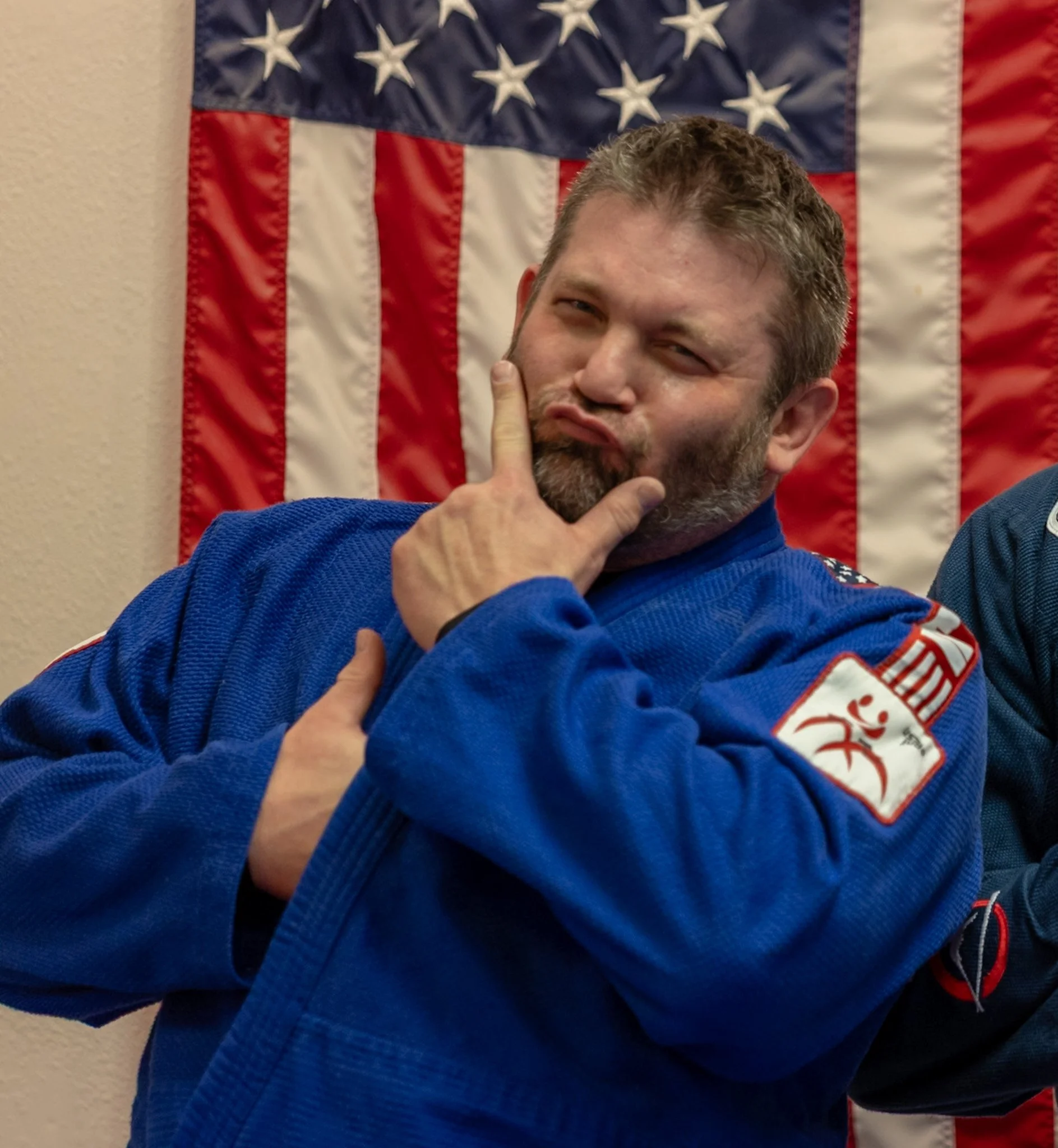
Eclectic Instructor Promoted to Second Degree Black Belt
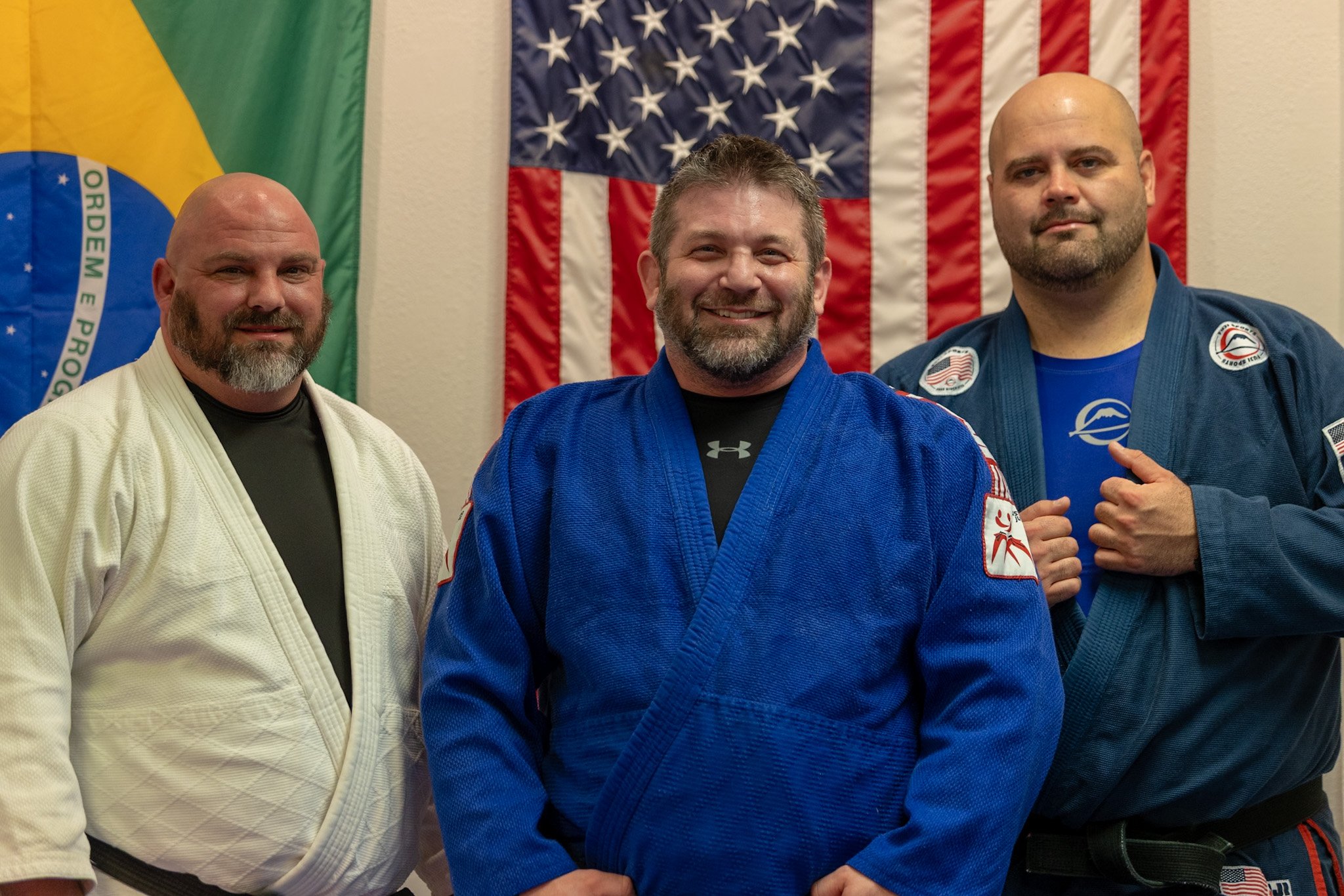
Left to Right - Sensei Chaye Thompson, Sensei Gary Hillesheim, Sensei Nick Formaro
In martial arts generally, promotions initially come at a furious pace and rapidly slow down with each progressive rank, with more stringent requirements for each promotion. At the Des Moines Judo Academy, rokyu, the rank associated with yellow belt, can generally be attained after two months, assuming you attend two classes a week, with gokyu, the orange belt, being achieved with an additional three to five months of study thereafter, assuming you train at the same pace consistently. After attaining Shodan, the first degree of black belt, advancing further requires further requires years of regular training for at least the next several promotions, as well as additional qualifications to be eligible.
On October 22nd, 2025, Sensei Gary Hillesheim qualified for and received his Nidan, or second degree black belt. Sensei Hillesheim is generally outspoken against shiai or competition, arguing that the restrictions on legal techniques disincentivizes learning the full curriculum of the Kodokan and thus stifles the creativity and development of the art, and thus chose not to qualify for promotion via competition. Instead, Sensei Hillesheim choose to meet the criteria for this promotion by learning and performing an additional Kata or “Form”, or pre-arranged routine of techniques used both for training and to demonstrate proficiency in a set of techniques or principles.
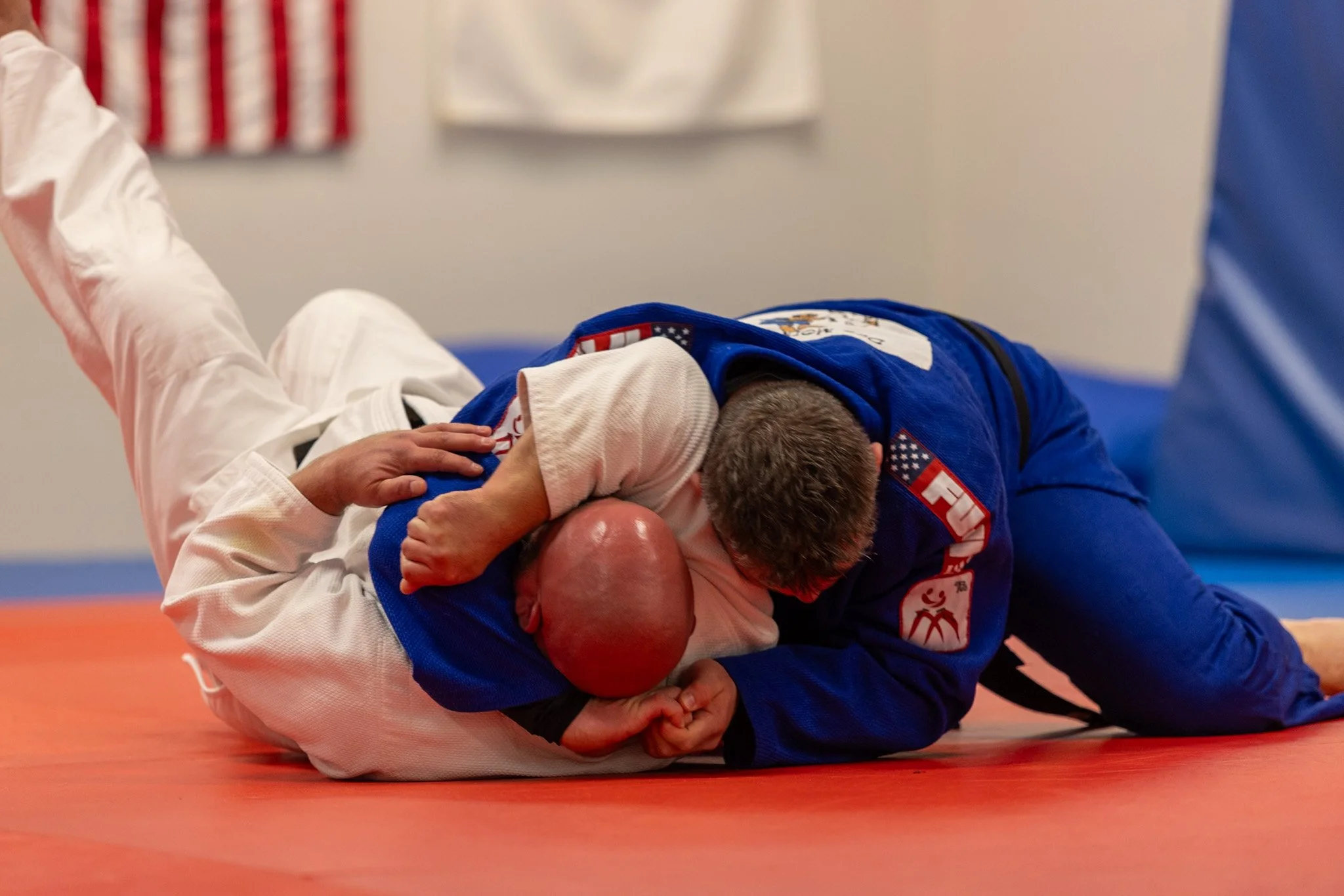
Sensei Hillesheim elected to perform the Katame-no-Kata, which translates to ”Forms of Grappling”, a routine consisting entirely of newaza or groundfighting techniques. To prepare for this, Sensei Hillesheim and Sensei Chaye Thompson trained outside regular class time to perform the Kata, and performed it as part of an examination on October 22nd, 2025. The choice of the Katame-no-Kata was in keeping with Sensei Hillesheim’s personal philosophy and teachings concerning Judo, in which he points out that there are there are five ways to win a judo match (throw, pin, strangulation, joint lock, and disqualification of opponent) but that must of competition focused Judo’s training is focused on a single method of victory (throws).
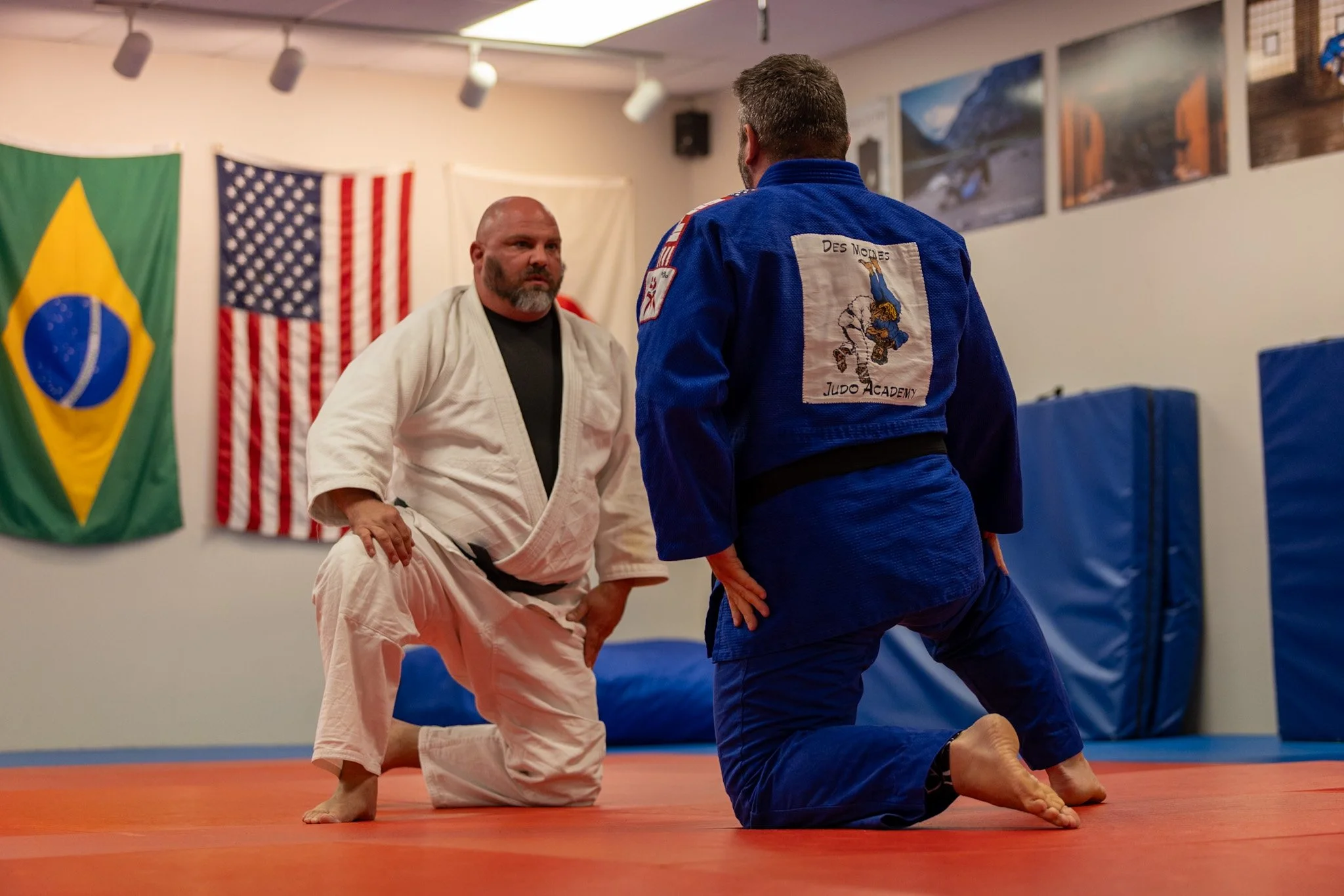
The Katame-no-Kata is deceptively challenging. Despite the tori (person performing the techniques) never having to lift or carry the uke (person on whom techniques are performed), and most of the kata being performed while kneeling, both parties actually exerted themselves enough to sweat while performing the kata. Maintaining proper posture while transitioning into and through the movements, as well as engaging in several stylized non-attack movements routed in Japanese history and tradition, adds to the challenge of performing this kata.
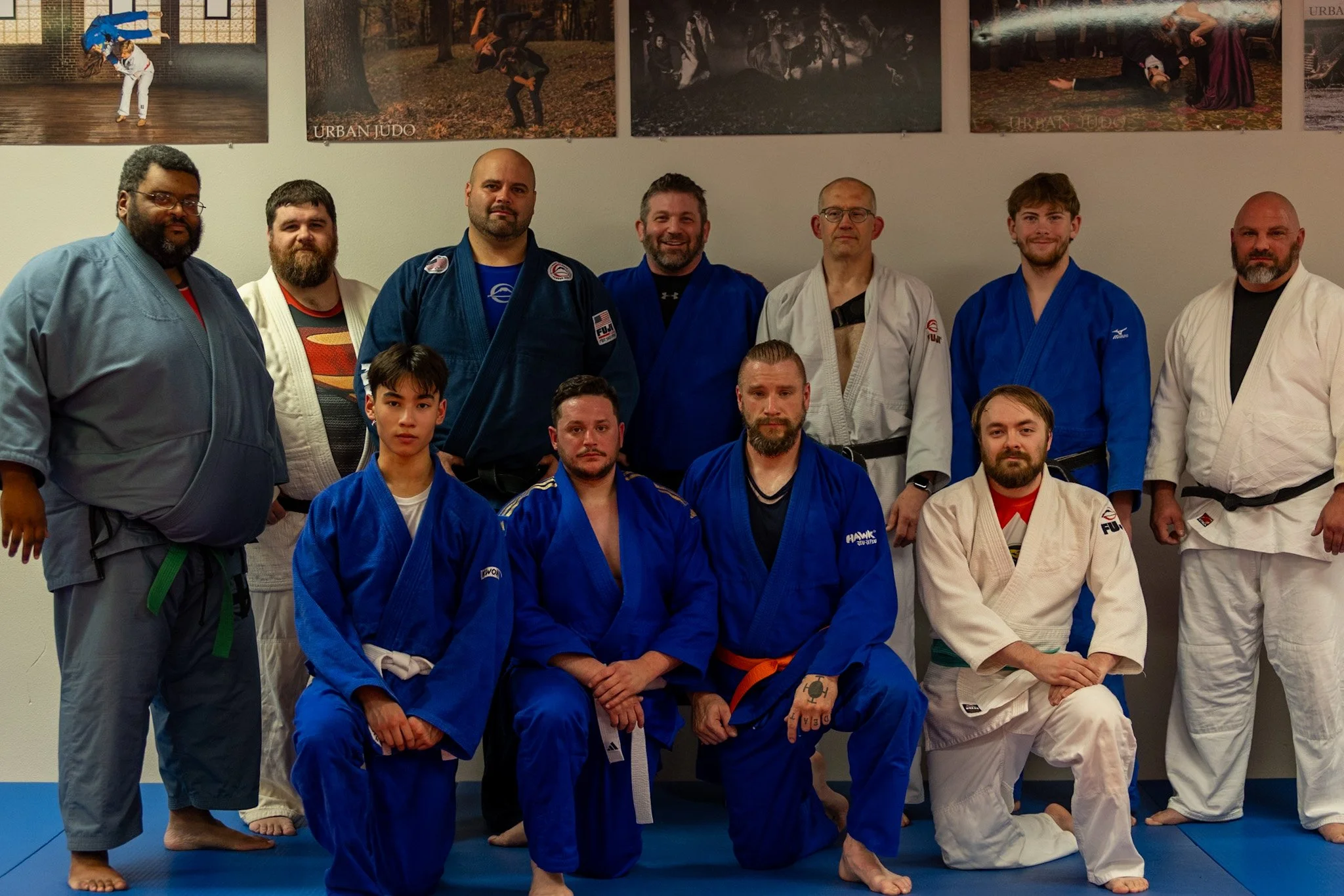
Left to Right: Top Row - Jacob van Cleaf, Sensei Ryan Suhr, Sensei Nick Formaro, Sensei Gary Hillesheim, Sensei Jeff Volcheck, Sensei Josh Pohl, Sensei Chaye Thompson
Bottom Row - Young White Belt Guy, Jake Kane, Adam Thompson, Zachary Strahl
Congratulations to Sensei Hillesheim and Sensei Thompson for performing the kata, and on Sensei Hillesheim’s promotion. Their diligence contributes to the ongoing success of the Des Moines Judo Academy, and reflects the attitude of excellence we strive to cultivate.
Dojo Puts Up Strong Performance at 2025 Iowa State Championship
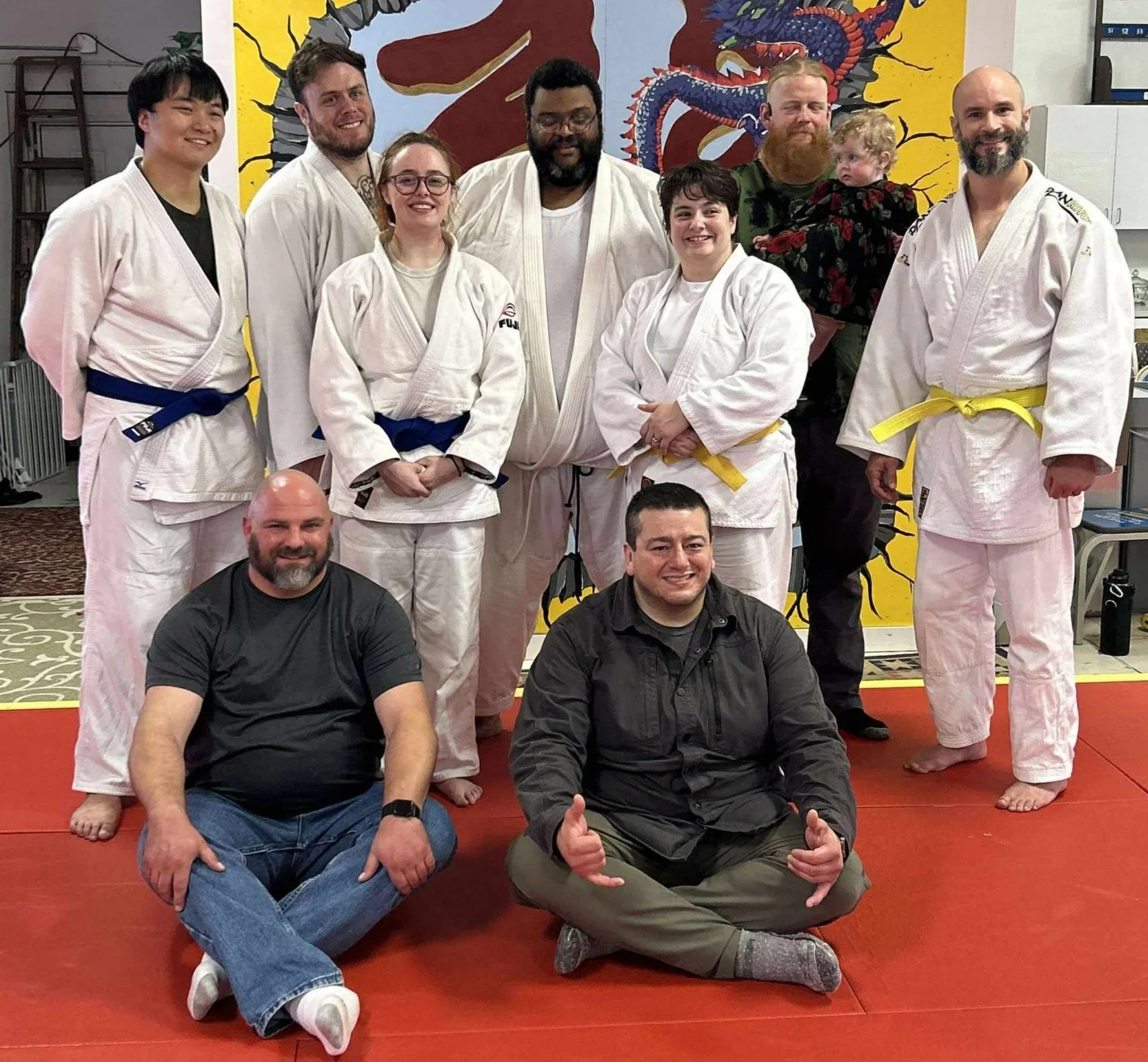
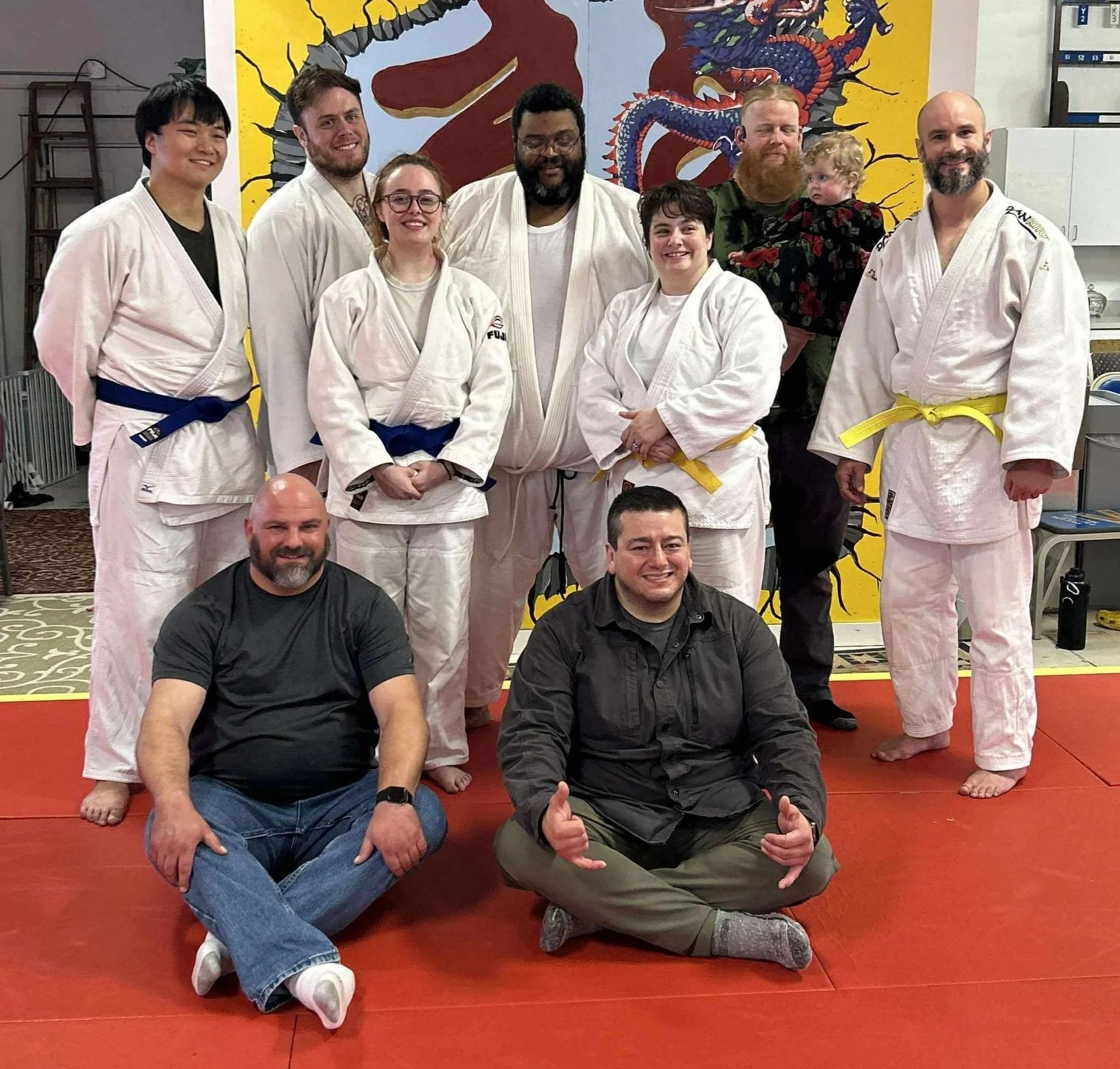
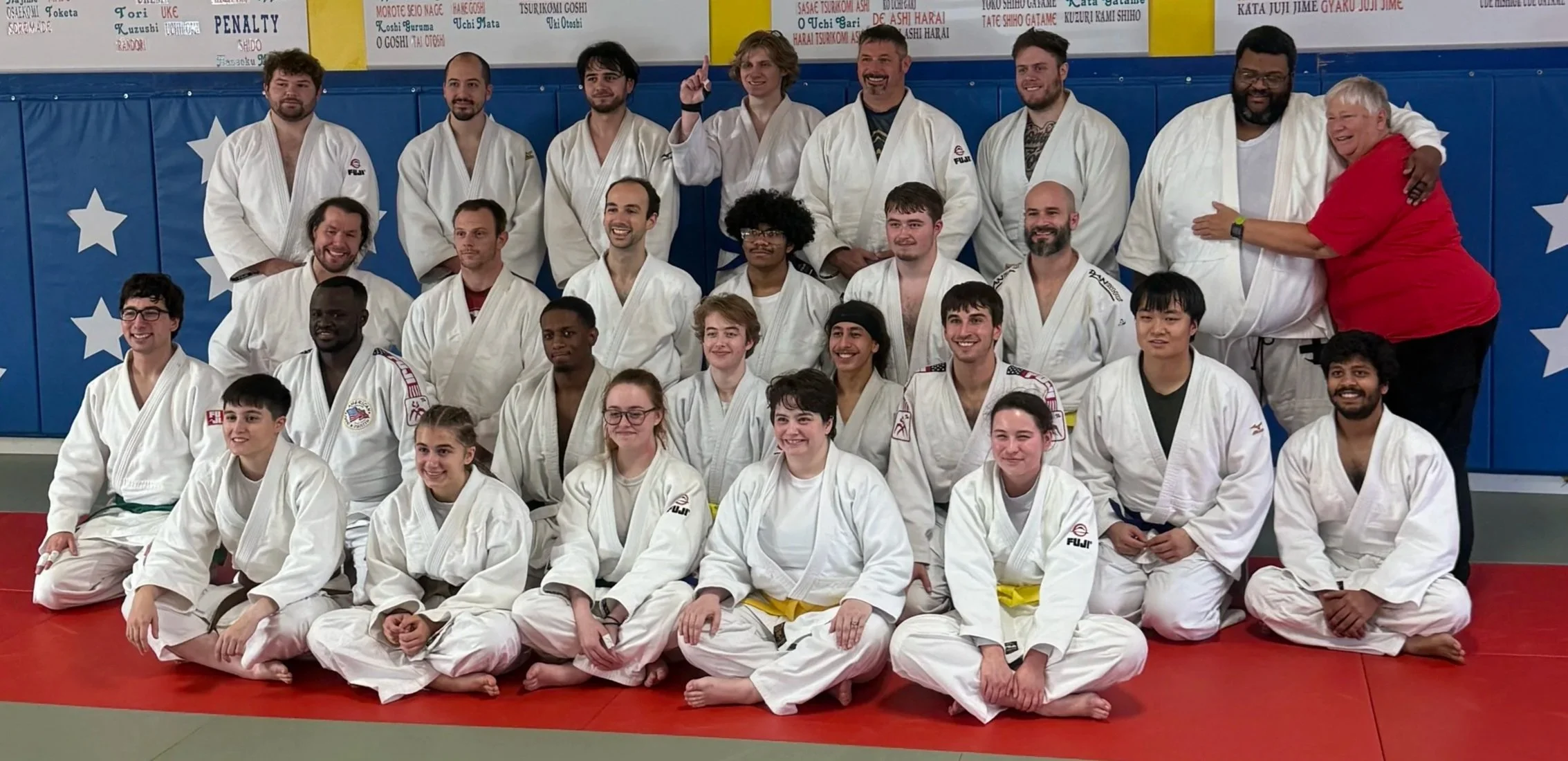
Left to Right, Top Row - Jae, Swede, Liv, Jacob, Rachel, Logan, Ember, Boli. Bottom Row - Sensei Chaye Thompson, Sensei Leo Rodriguez
The 2025 Iowa State Championship was held on Sunday, November 9th, rather than on its usual Saturday, due to the seminar led by Megumi Sensei being held at the tournament venue on Saturday. Despite the unusual timing, the tournament had a strong turnout of 77 competitors, of which 8 were adults from the Des Moines Judo Academy. The day saw our dojo represented by veteran competitors like Jaehyeok Choi (yonkyu/green belt), Olivia McBee (sankyu/brown belt) and Jacob van Cleaf (yonkyu/green belt). It was also the first outing for the newly promoted Joseph Swedenhjelm (rokyu/yellow belt) and a mainstay of our sister school, Squared BJJ of Grinnell, whose been granted rank through the Des Moines Judo Academy under Sensei Leo Rodriguez, Bolívar Aponte Rolón (rokyu/yellow belt). Rachel Salisbury (rokyu/ yellow belt) also made it on the mat for her second shiai or “competition,” determined to put the lesson’s from her experience in Minnesota, as well as her recent training, to good use. The team was supported by several members of our dojo, and coached by Sensei’s Leo Rodriguez and Chaye Thompson.
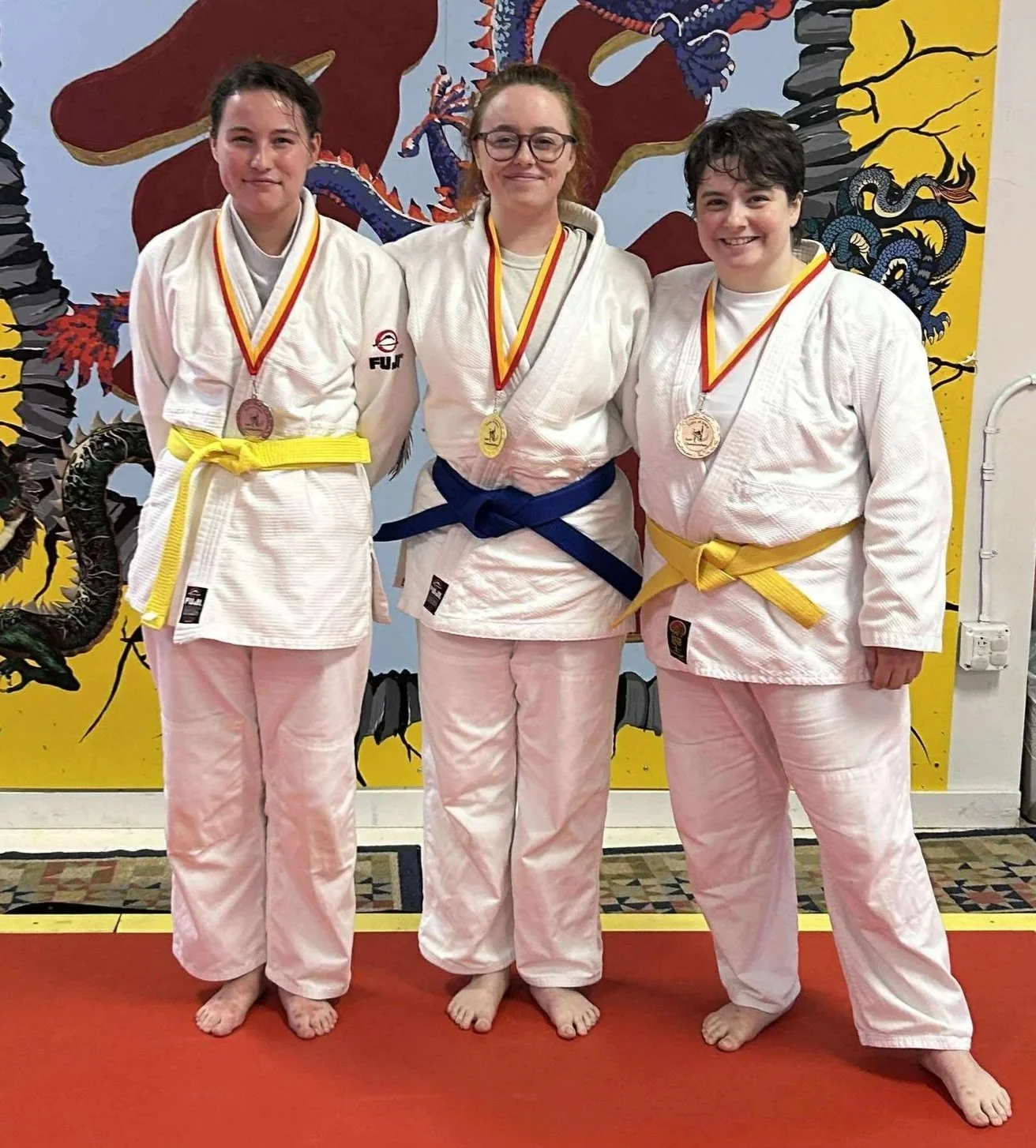
Left to Right - Alayna Gushin, Liv, Rachel
Olivia (“Liv”), and Rachel faced off against each other and Alayna Gushin of Teikiatsu Judo in the Senior Women’s Medium Division. Rachel lost to Alayna, but won against Liv by scoring two waza-ari (a half-point score, awarded for pinning an opponent for at least 10, but fewer than 20, seconds, or a throw that fails to score an ippon) using sasae tsurikomi ashi to obtain waza-ari awasete ippon (lit. “two half-points make a full point”), securing a bronze medal and marking her first tournament win. The match between the two was exciting, taking multiple bouts with several falls failing to score points and prolonged periods of groundwork. Despite being defeated by Rachel, Liv rallied and went on to beat Alayna by scoring ippon (a full point score which instantly ends a match, awarded for pinning an opponent for 20 seconds, or throwing an opponent so they land on their back with force, speed, and control) with drop seoi-nage (shoulder throw), a move she’s been cultivating for at least the past two months. Although the throw initially appeared to not be working, Liv roused her inner bushi (warrior) and continued to drive forward until her opponent was first disbalanced, then fallen, securing her the gold and the fastest ippon in the women division, and second fastest ippon by a woman all day, at 15 seconds.
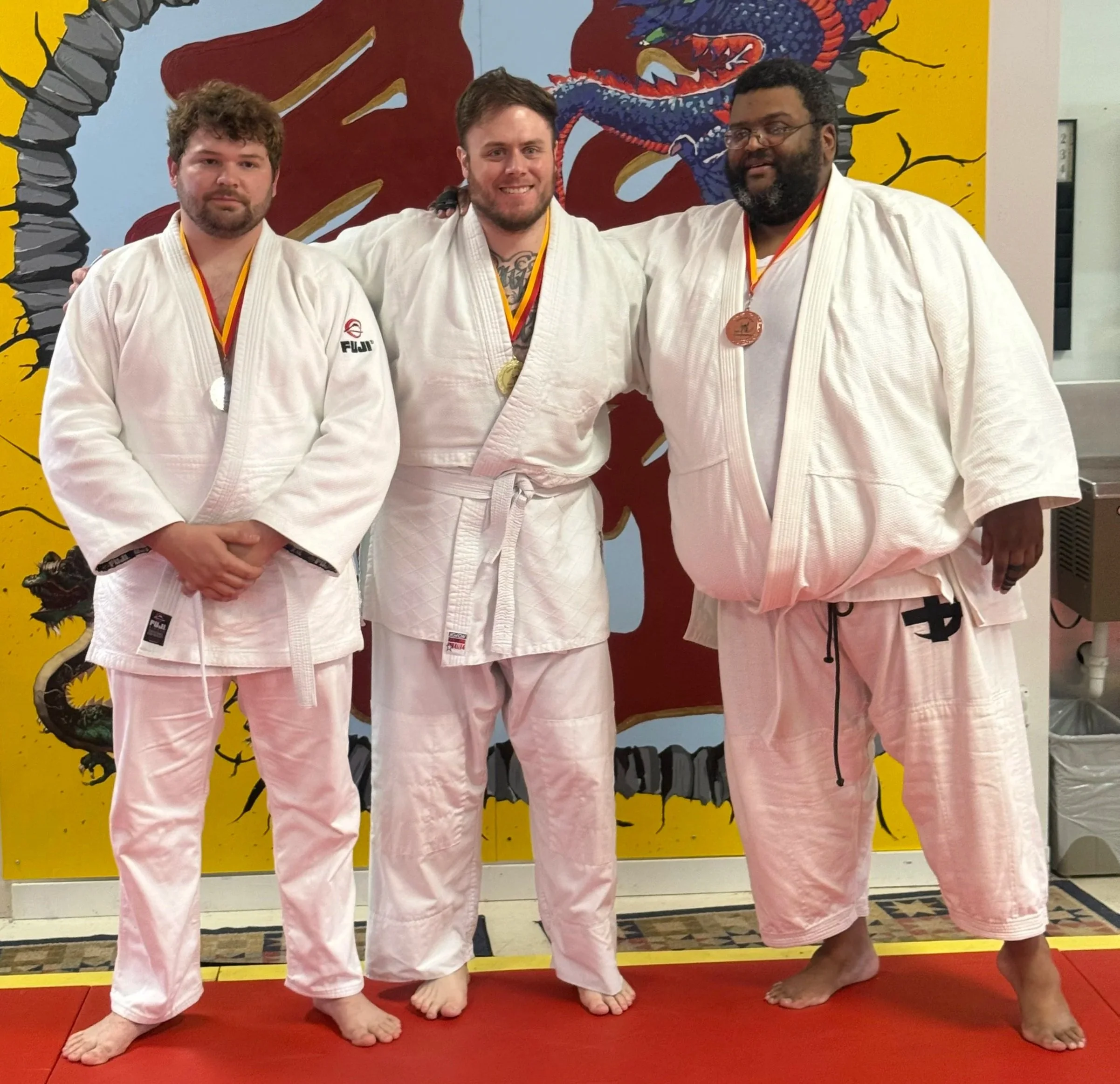
Left to Right - Garret Cox, Swede, Jacob
Joseph Swedenhjelm (“Swede”) fought in division two of the Senior Men’s Novice Heavy, which was split into two divisions due to an unprecedented 7 qualifying men showing for competition. Division two consisted of Swede, Jacob van Cleaf, and Garret Cox of Quad City Judo & Fitness. Swede took the gold, defeating both his rival competitors with a ko-uchi-gari to o-soto-gari combo he learned in Thursday evening classes from Sensei Leo, taking out Garret Cox in 15 seconds, and Jacob in 14 seconds. Jacob van Cleaf managed to hold out against Garret Cox for 1 minute and 8 seconds, before learning a valuable lesson about fighting until you hear sore-made or “finished” (the call the indicates the match is concluded and all fighting has ceased) and being pinned, gaining him the bronze medal.
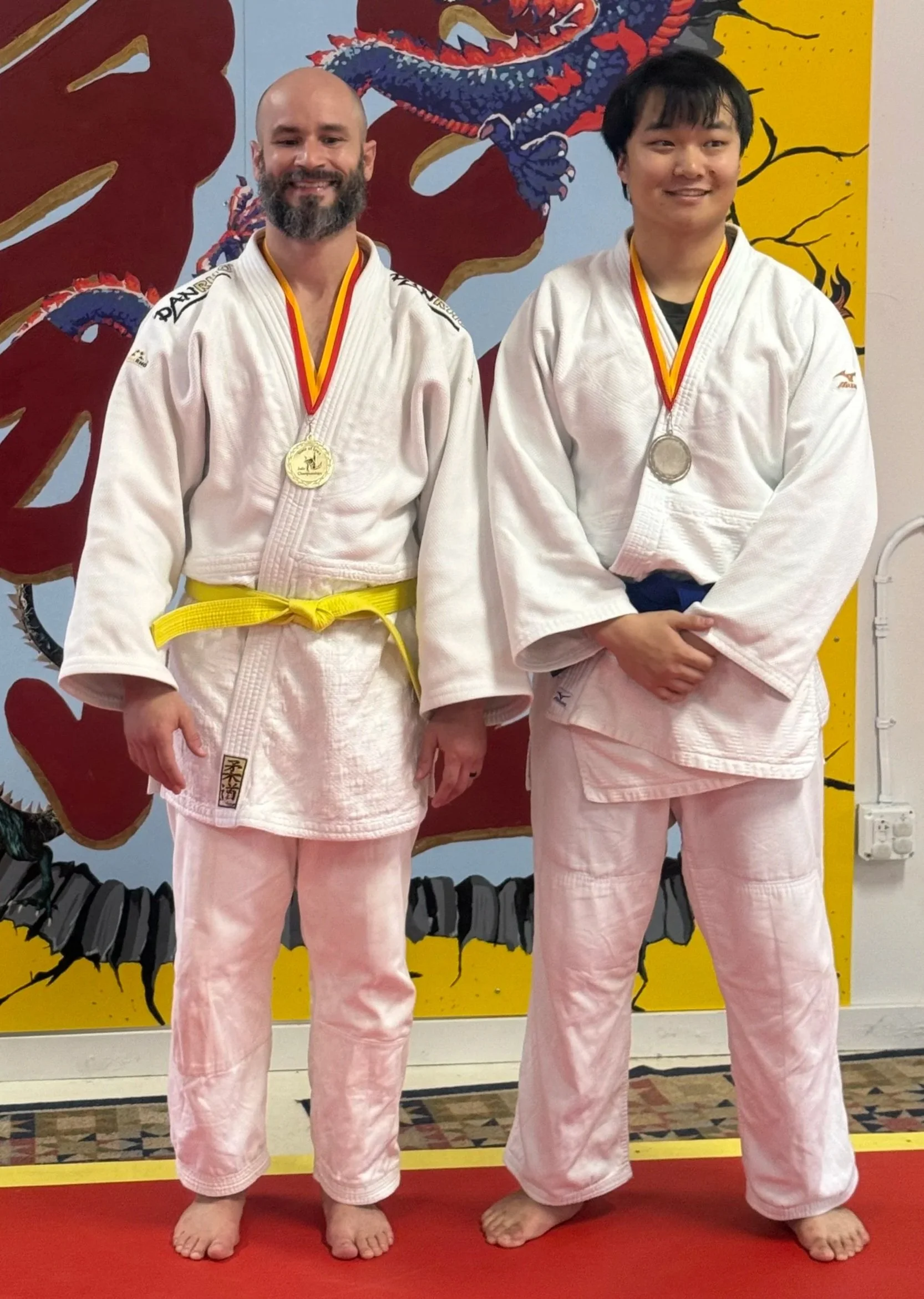
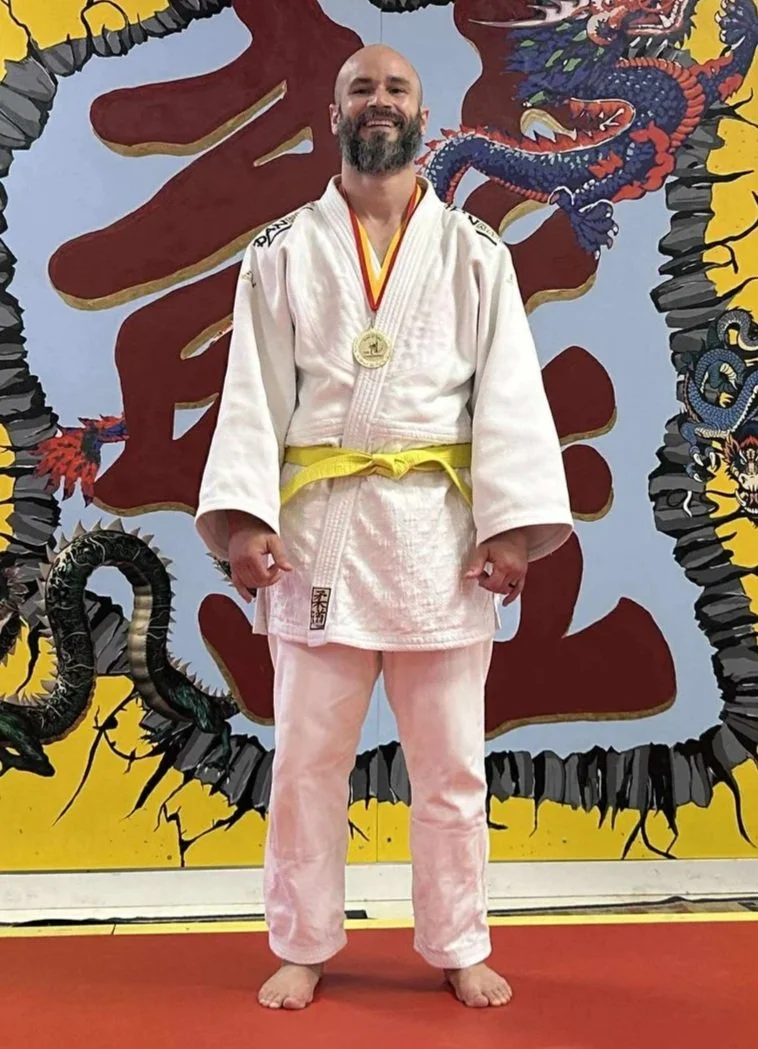
Bolivar (“Boli”) had a gold banner day, sweeping both division one of the Senior Men’s Novice Heavy and the Men’s Masters 30-45 Heavy, each by ippon with a magnificent harai-goshi in approximately 16 to 40 seconds, with only two matches standing out. The Men’s Masters was best two out of three against Cory Cooper of Sempai Judo Academy, with the Boli’s second win being by walkover due to Cory being injured in an earlier match. The other standout was against our own Jaehyeok Choi (“Jae”), a long time successful competitor who also managed to dominate everyone else in his division. The match between the two took 2 minutes and 17 seconds, falling just 43 seconds short of going the full 3 minute period, but was ultimately Boli’s victory to claim, leaving Jae with an amazing story and a well earned silver medal.
A bracket redistribution saw Jacob van Cleaf moved to the Master’s Men Over 45 Heavy, to fight Michael Keller Jr. of Wahadachi Judo Club to attempt to retain the master’s champion title, which he had been training with an eye towards since last year’s championship. Jacob was able to win the first match by pin using mune-gatame in one minute and forty seconds, securing his first victory via osae-komi (hold down/pin). According to Sensei Leo Rodriguez, Jacob “fought great and showed lots of growth and resilience,” with the second and third matches being close and taking fifty-three seconds and one minute and forty-seven seconds respectively. Unfortunately Jacob was unable to secure a second victory and gave up the title. However, when asked by his son if it intended to focus with the same intensity to win it back next year, Jacob replied “can’t stop, won’t stop, don’t even know how to stop.”

Why Judo? How it Enhances Your Martial Arts Journey and Complements Kali & Silat
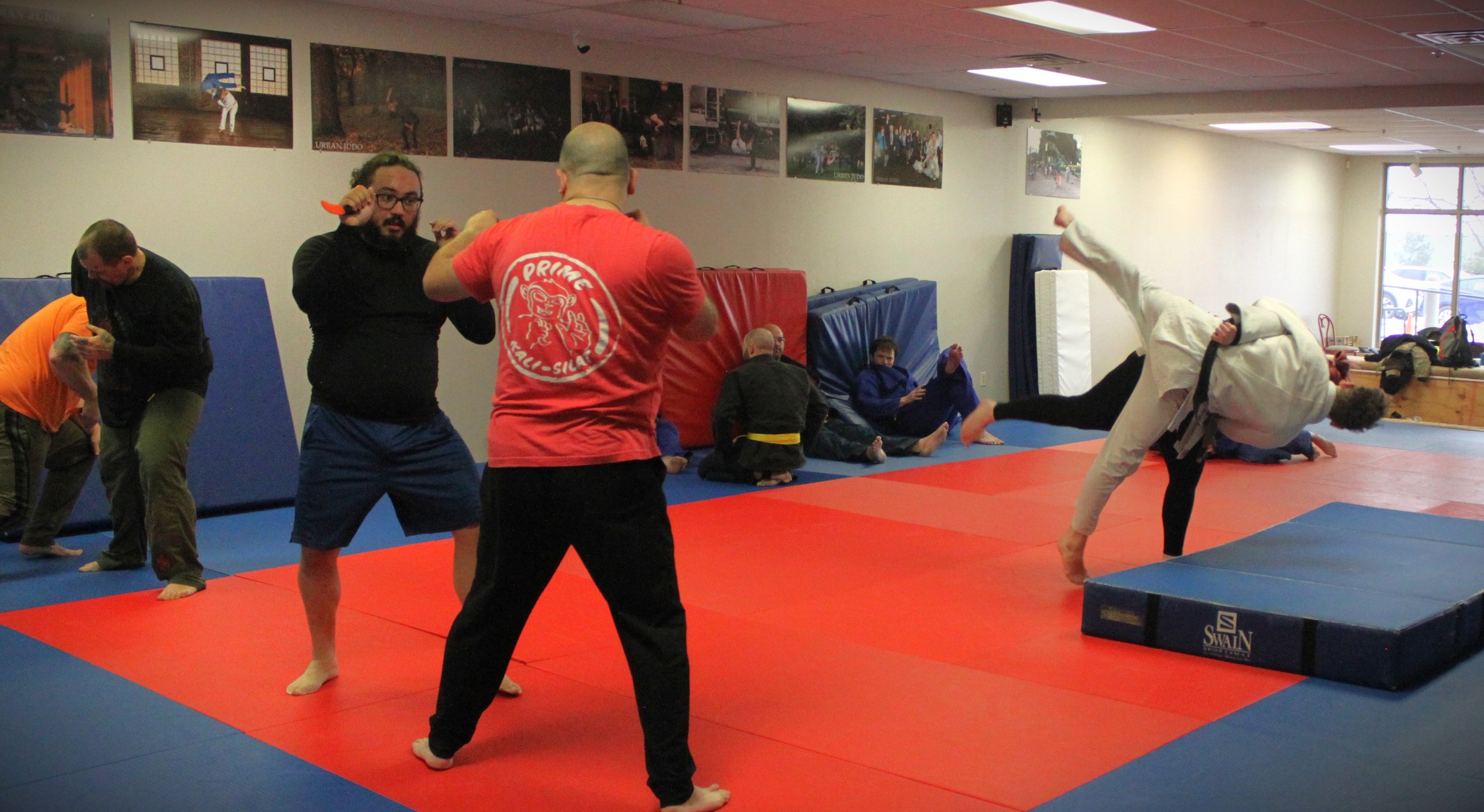
If you’re looking to dive deeper into martial arts, there’s one art that stands out as a game-changer: Judo. But why should you consider Judo as part of your martial arts journey? And how can it enhance what you already know in arts like Kali and Silat? Let’s break it down. Grab your gi, get ready, and let’s jump into this!
Why Take Judo?
Judo isn’t just about throwing people around, although let’s be honest—that’s a major part of it. At its core, Judo teaches you the principle of using your opponent’s energy and momentum against them. It’s like the ultimate game of chess where leverage, timing, and balance become your weapons of choice.
The best part? You don’t need to be the Hulk to throw people. Judo’s all about strategy. It’s not about muscle—it’s about using your opponent’s movement against them. The real fun comes when you figure out how to outwit, out-maneuver, and outsmart your opponent, all while making it look like a smooth, effortless throw.
And hey, Judo’s not just a mind game—it’s also fantastic for conditioning. Your body will get leaner, faster, and stronger. You'll build flexibility, explosive power, and a solid core. And those grueling grip fights? Totally worth it when you feel how much they improve your throws.
How Does Judo Enhance Other Martial Arts?
When you step onto the mat for Judo, you’ll start to notice some unexpected perks in your other martial arts too. The throws, the groundwork, the grip work—all of these techniques integrate seamlessly with your existing skills.

Judo is applicable without the gi
If you’re practicing Kali, Judo’s emphasis on leverage and balance is a game-changer. Think about it: you’re used to controlling distance and offense with weapons, right? But when you know how to throw and off-balance someone in the blink of an eye, it transforms the way you flow through a fight. You go from strike to takedown, and that transition? Smooth as butter.
In Silat, you’ll feel the same magic happen. Judo’s groundwork techniques (or ne-waza) will enhance your low stances, joint locks, and trapping. Ground control in Judo isn’t just about taking someone to the mat—it’s about dominating them there. So whether you’re using Silat’s quick strikes or Judo’s throws, you're stacking your game like a house of cards—perfectly balanced.
How Kali, Silat, and Judo Work Together
Now, let’s break it down even further. Kali, Silat, and Judo each bring something unique to the martial arts table. Kali gives you the skills to defend yourself at range—whether you’re dealing with sticks, knives, or just your empty hands. Control and distance are your friends, and Kali makes sure you’re always in control.

Silat takes it to a whole new level with its deceptive movement, low stances, and utilizing your environment to outsmart your opponent. Think of it as fluidity with a side of sneakiness. It’s the art of being tactical—weaving in and out of strikes with joint locks and close-quarters combat.
Then you’ve got Judo, the king of throws, grappling, and ground control. Judo isn’t just about standing—it’s about transitioning from standing to the ground with ease and grace (well, at least grace with a little sweat). And once you’re on the ground? You’re staying there—it’s your playground.
Now, imagine combining all three. You’ve got strikes from Kali, evasion and tactical movement from Silat, and takedowns from Judo. A complete martial artist who can adapt to any situation and finish strong—whether that’s with a strike, throw, or submission.
Des Moines Judo Academy: A Unique Opportunity
At Des Moines Judo Academy, we’re the only Judo dojo in the Des Moines area—you’d have to drive a couple of hours to the nearest one! But we’re lucky enough to also teach Kali, Silat, and Weapons right here at DSM Judo Academy. That’s a double whammy of awesomeness! This rare opportunity to train in multiple arts under one roof is something most schools don’t offer, and it’s an incredible advantage for anyone who wants a well-rounded martial arts experience.
Not every school is interested in expanding their scope to include multiple arts, and that’s perfectly okay. There’s a lot of merit in schools that want to focus on one style and become masters of it. However, here at DSM Judo Academy, we’re able to bridge multiple styles to give our students a comprehensive view of martial arts. Whether you’re looking to explore Judo as a standalone discipline or integrate it with your existing Kali or Silat practice, we’ve got you covered. It's a rare opportunity, and we’re proud to offer it.
The Takeaway
Whether you’re new to martial arts or have been practicing for years, Judo adds a critical layer to your martial arts toolkit. It’s not just about throws—it’s about control, timing, and leveraging your opponent’s energy. By combining Judo with the strikes and weapon skills of Kali and the deceptive, close-quarters combat of Silat, you’re building a martial artist who can handle any challenge that comes their way.
So, what are you waiting for? Get on the mat, embrace Judo’s art of balance, and watch how it complements your entire martial arts journey. Plus, with Kali and Silat on the side? You’ll be one of the most well-rounded martial artists out there.
Your Turn:
What other martial arts do you train in besides Judo? How do you see how other arts complement Judo, or how Judo enhances the skills you already have? Share your thoughts in the comments below and let’s keep the conversation rolling! After all, we’re all here to learn and level up together.

Far Travelling Pair Promoted Together
From Right to Left - Sensei Pohl, Ian Schaff, Jon Milliedge, Sensei Hilleshiem
Ian and Jon, regulars at Saturday open mats, have taken the next step on their journey into the Way of Gentleness, by being promoted to “gokyu” or orange belt. The duo normally spend several hours every Saturday developing their skills from approximately 9:30 AM until the open mat host is done the day or events demand they yield (usually around 12:40 PM), so they can work master what they learn training with each other during weekday. On May 3rd, 2025, they chose to forego training to instead demonstrate what they’ve learned in the pursuit of recognition of their hard won skills. Testing was overseen by Sensei Hilleshiem and Sensei Pohl, who determined the two passed muster, while a few stragglers looked on.
Ian, a student of jujitsu, bujinkan, and kali-silat in addition to Judo. As to be expected his “newaza” or “ground fighting” (the portion of combat that takes place after one or more of the combatants has fallen to the ground) is more developed than his “nage waza” or throwing techniques, he not only demonstrated competence with the required number of throws, but demonstrated an affinity for tai-otoshi, o-goshi, and uchi-mata. When not training, Ian enjoys tabletop roleplaying games, making mead, hunting, and spending time with his beloved dog.
Jon, a judoka with an MMA (Mixed Martial Arts) and wrestling background, who also cross trains in jujitsu and bujinkan, has a more robust standing game of the pair, despite Ian having a better flare for technical details. Jon also posses boundless positivity and enthusiasm, which makes long training sessions go by and the blink of an eye. While his foot sweeps won him gold and silver in the Governor’s Cup earlier this year, and even earned praise from Sensei Parkhill, Jon chose to instead show off his o-soto-gari, ippon seoi-nage, and tani-otoshi, all of which he’s been drilling endlessly since March. When off the mat, Jon spends most of his time with his family, being married and a father.

Jujitsu Promotion
Logan Ballanger was promoted this past Sunday, November 10th, 2024, at an open mat, receiving his first stripe on his white belt. Logan currently holds the rank of “gokyu” or orange belt in Judo and frequently represents the Des Moines Judo & Sambo Academy at competitions through out the midwest. Logan’s recent use of ground fighting techniques at the 2024 Iowa State Championship the day before his promotion, no doubt contributed to the decision to award his first stripe.
Jujitsu, unlike judo, does not , typically issue a new belt with each rank, instead adding stripes to a black area on the practitioner’s belt until they accumulate their 4th stripe, after which their next promotion results in them being awarded a stripeless belt of a new color.

Jujitsu Promotions!
Two students were recently promoted in Jujitsu! Congratulations!
Congratulations to Josh Pohl and Zac Strahl, both of whom were promoted in their Jujitsu training last night. Each of them received a stripe on their white belt, denoting a substantial increase in skill and understanding. Each has worked hard to achieve this, and has substantially improved their ground game in the process.
Jujitsu classes are available to all members of the Des Moines Judo & Sambo Academy as part of their membership. See class schedule for dates and times.