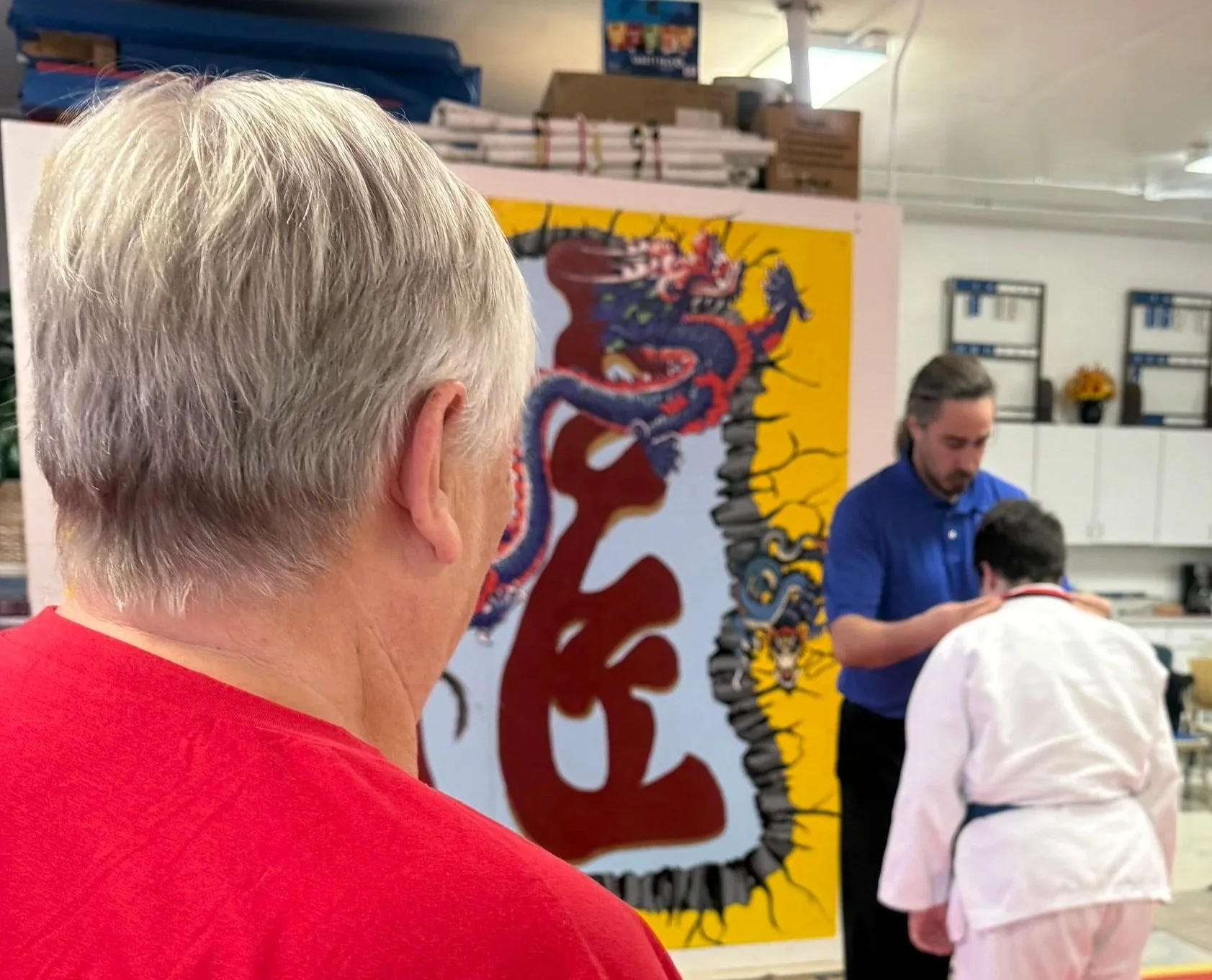
Dojo Continues Pattern of Excellence at 2026 Governor’s Cup
The 2026 Governor’s Cup was held on March 7th in Ames this year at Teikiatsu Judo, with 61 total participants, a twenty-five percent (25%) increase over last year. Among the adult judoka who took to the mat that day, only three (3) hailed from the Des Moines Judo Academy: Logan Ballanger (yonkyu/green belt), Joseph Swedenhjelm (rokyu/yellow belt), and Rachel Salisbury (rokyu/yellow belt). The trio was coached by Sensei Chaye Thompson.
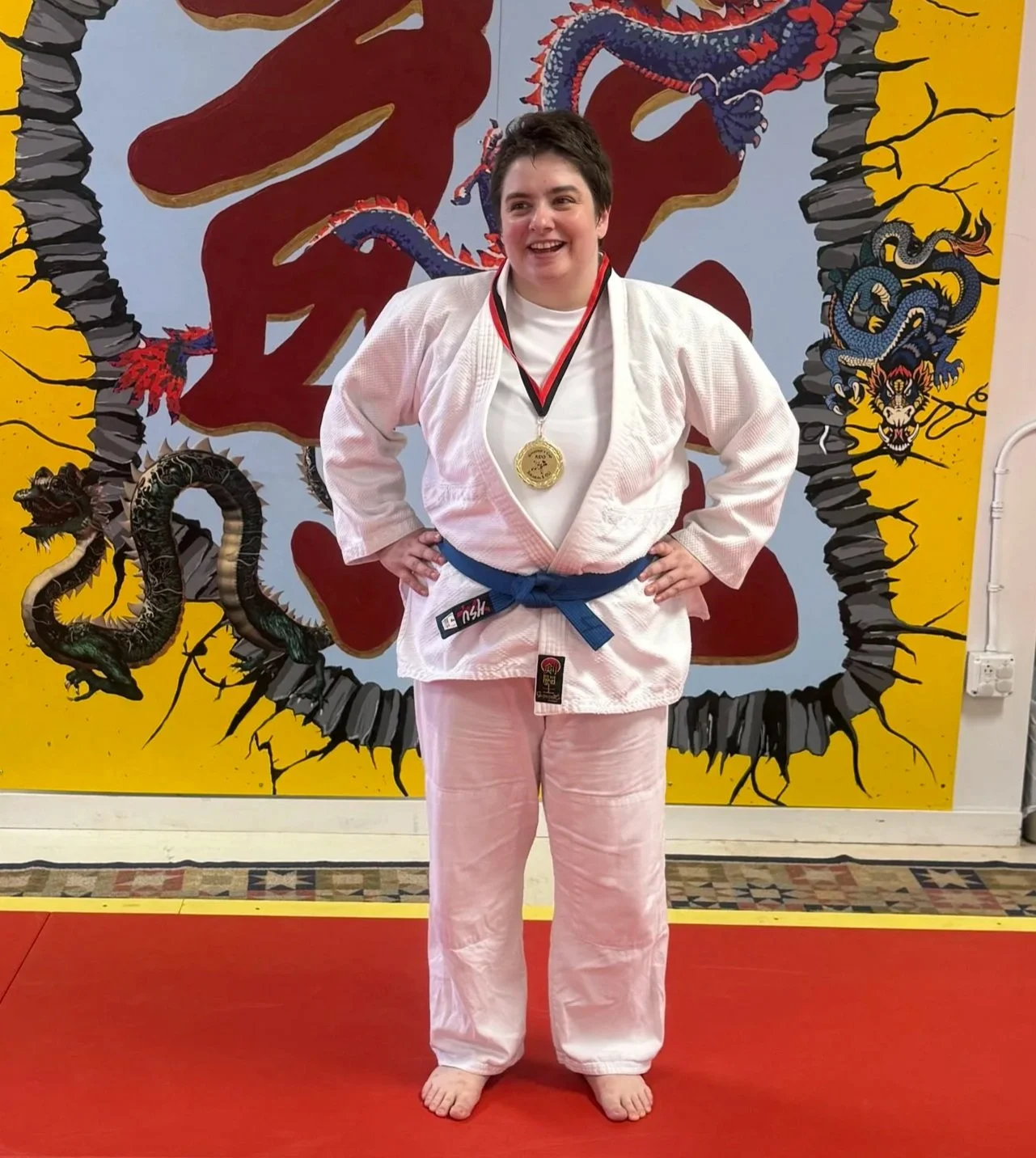
Salisbury awarded medal
Rachel fought in the women’s combined bracket, facing familiar opponents Zoe Mytides and Alayna Guschin. Rachel’s first match was against Zoe, and was characterized by Mytides alternation between powerful pushes straight back and rightward circular motion to create openings for footsweeps and reaps. Rachel demonstrated growth in the face of this aggressive style of play, focusing on maintaining good balance and posture, while waiting for the ideal opportunity to attack. Salisbury was taken down once early in the match during a failed attempt at a drop morote-seoi-nage (her preferred attack), which saw Zoe awarded a yuko before Salisbury obtained a half-guard and the pair were returned to their feet. After returning to the action on their feet, Rachel charged in for a chain of attempts at sasae-tsurikomi-ashi, throwing Zoe out of position, allowing Rachel to attempt to move into position for tani-otoshi. Unfortunately, Zoe caught on and slipped out of position, before scoring ippon with o-uchi-gari. Against Alayna, Salisbury scored a quick waza ari on her first attack (o-soto-gari) after obtaining a grip following some initial grip fighting. Salisury followed her waza ari up with an attempt at kesa-gatame that rapidly transitioned to koshi-jime, but didn’t quite secure the submission. After returning to their feet for another bout, Alayna was reluctant to grip with Rachel, who none the less secured a grip on her opponent and obtained a second waza ari via drop morote-seoi-nage, winning her the match. Rachel took home a silver medal from this competition.
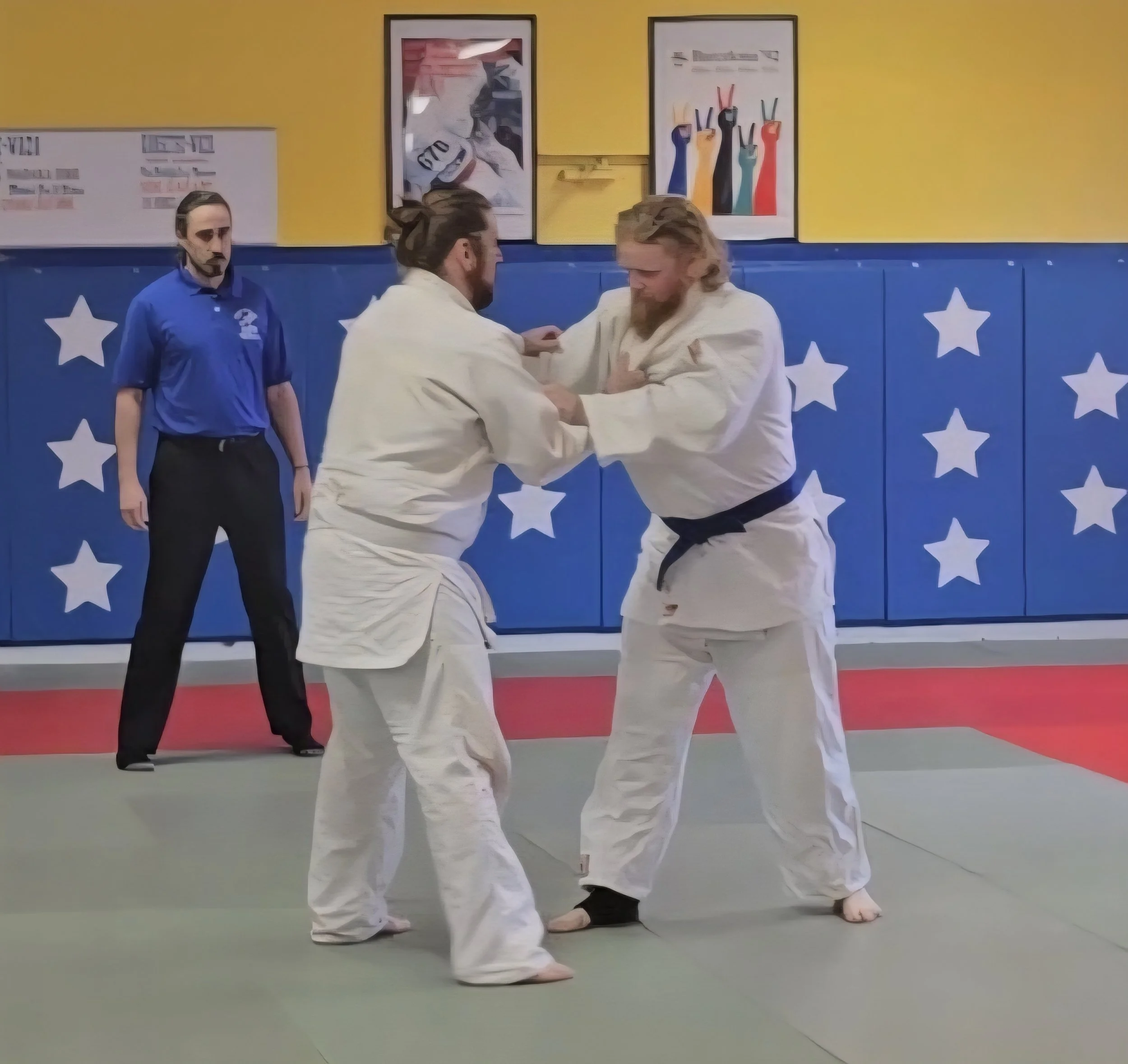
Ballanger (on right) grips up with opponent.
Logan Ballanger competed in the heavy men’s novice (which was large enough to be split into two divisions), the master’s heavy, and the senior men’s heavy divisions. He fought seven (7) of his eight (8) scheduled matches before succumbing to injury and being forced to concede the final match, earning one silver medal and two bronze. Ballanger established dominance early, winning his first match swiftly by obtaining guard as the follow up to a failed sumi-geashi, then making his opponent submit with kata-juji-jime.
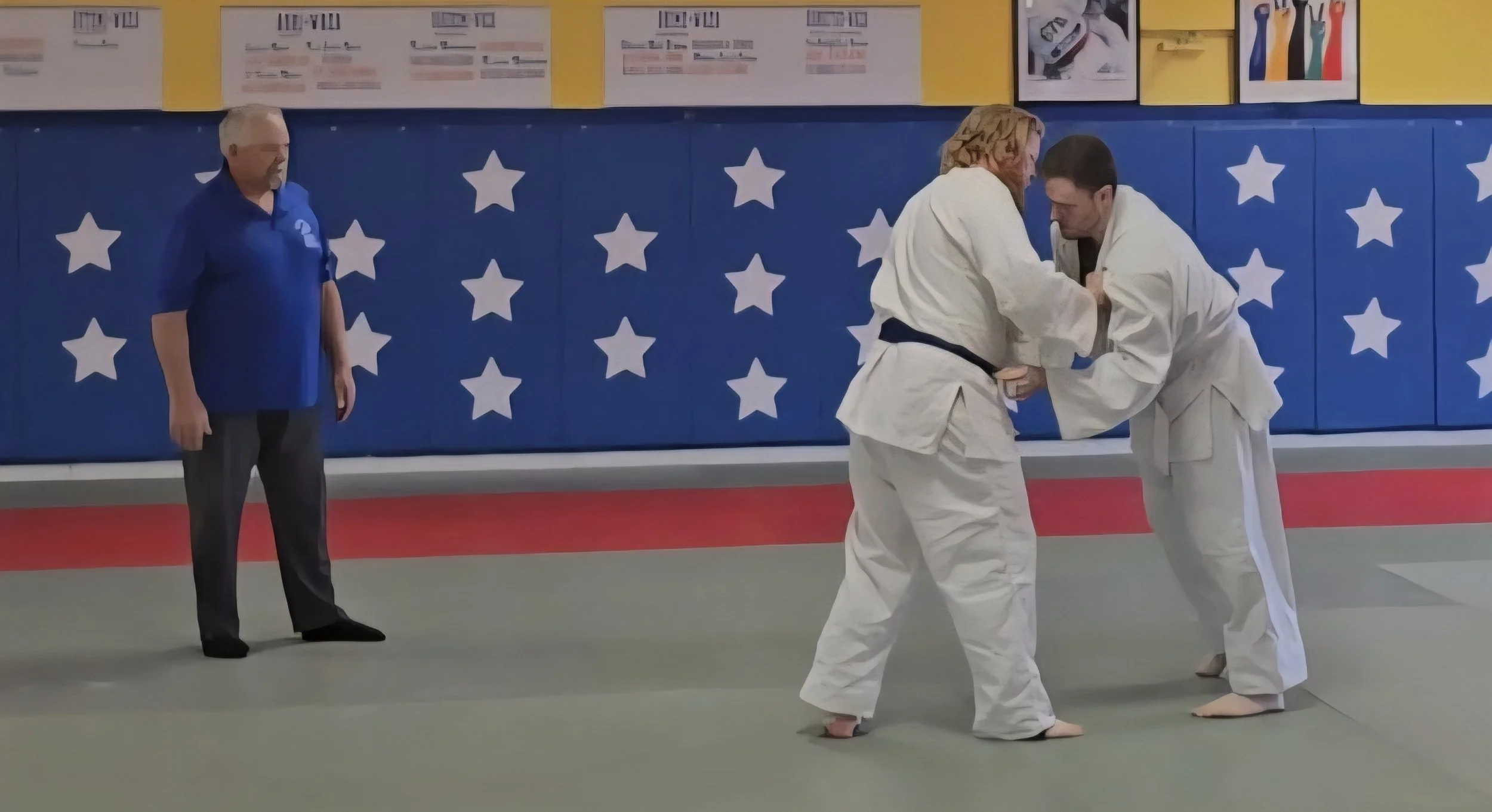
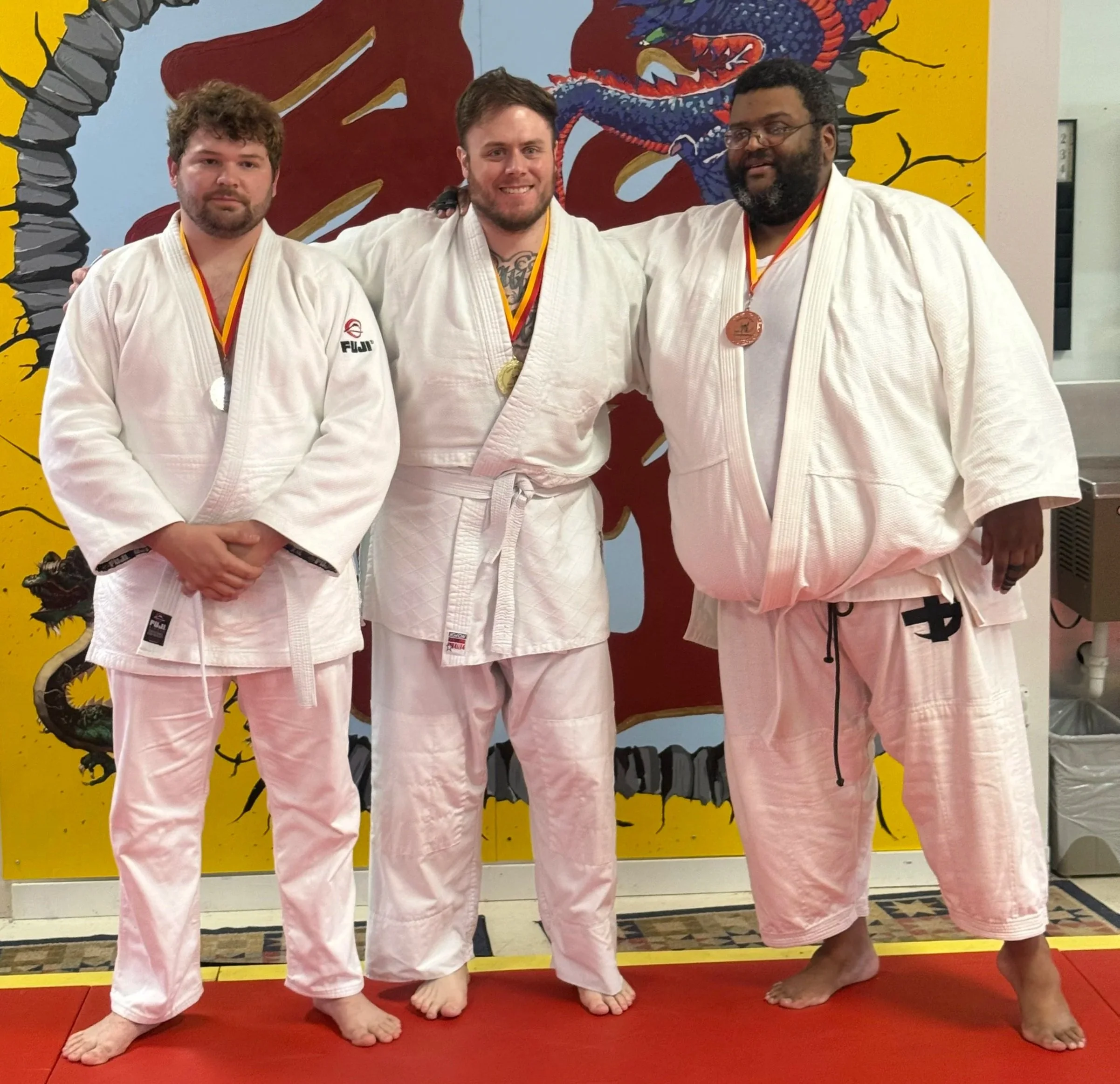
Left to Right: Referee Scheid, Logan Ballanger, Joseph Swedenhjelm
Ballanger’s second match was a dynamic battle with Joseph Swedenhjelm (“Joe Swede” or “Swede” for short), with Joe leaning heavily on his wrestling experience, adopting a thoroughly bent over posture. Ballanger leveraged his superior experience, first as a judoka, by using a lapel and over the back grip of the belt to gain control over the larger man and foil his attempt as sumi-geashi, and then as a jujistuka, by using a peterson roll when he ended up in the bottom on turtle after the scramble, to reverse the position and end up in ushiro-kesa-gatame. Swede rapidly escaped Ballanger’s ushiro-kesa-gatame via leg entanglement, resulting in the two being stood up. After being stood up, Logan immediately obtained a double sleeve grip and began playing defensively, until Swede freed one hand to secure a belt grip, prompting Logan to attempt uchi-mata, which took both competitors to the ground, with Swede landing on top. Ballanger was in good position and seemed like he might escape this as well, but unfortunately turned into Swede as he rolled to escape, rather than away from him, tightening his hold, allowing him to assume mune-gatame and secure the win via osae-komi.
Logan fought Erik Whiting of Sempai Judo, located in Nebraska, several times. In the first match between the two, Ballanger attempted to distract his opponent with antics, but failed in the attempt, being foot swept with de-ashi-barai in approximately 10.5 second, for the fastest adult ippon of the day. In their second match, Ballanger approached Whiting with more intensity and more defensively, dodging several foot sweeps and attempts to get inside or hip throws, while attempting, and at one point succeeding, at maneuvering Whiting to the ground without giving up a throw. After being stood up, and then receiving a shido for going out of bounds, Ballanger countered Whiting’s attempt at uchi-mata with ura-nage, securing an ippon and the win.
In Ballanger’s final match of the day, he fought Joseph Swede again. The match was much more dynamic, with the two clashing fiercely several times, only to end unfortunately. Swede finally managed to use his bent posture to maneuver into position for a hip throw, tossing Ballanger with o goshi for ippon, but landing on the side of Ballanger’s knee and ankle in the process. The resulting injuries temporarily stopped action, while medical staff check out Logan and determined him to be okay, before instructing that he sit out his final match of the competition.
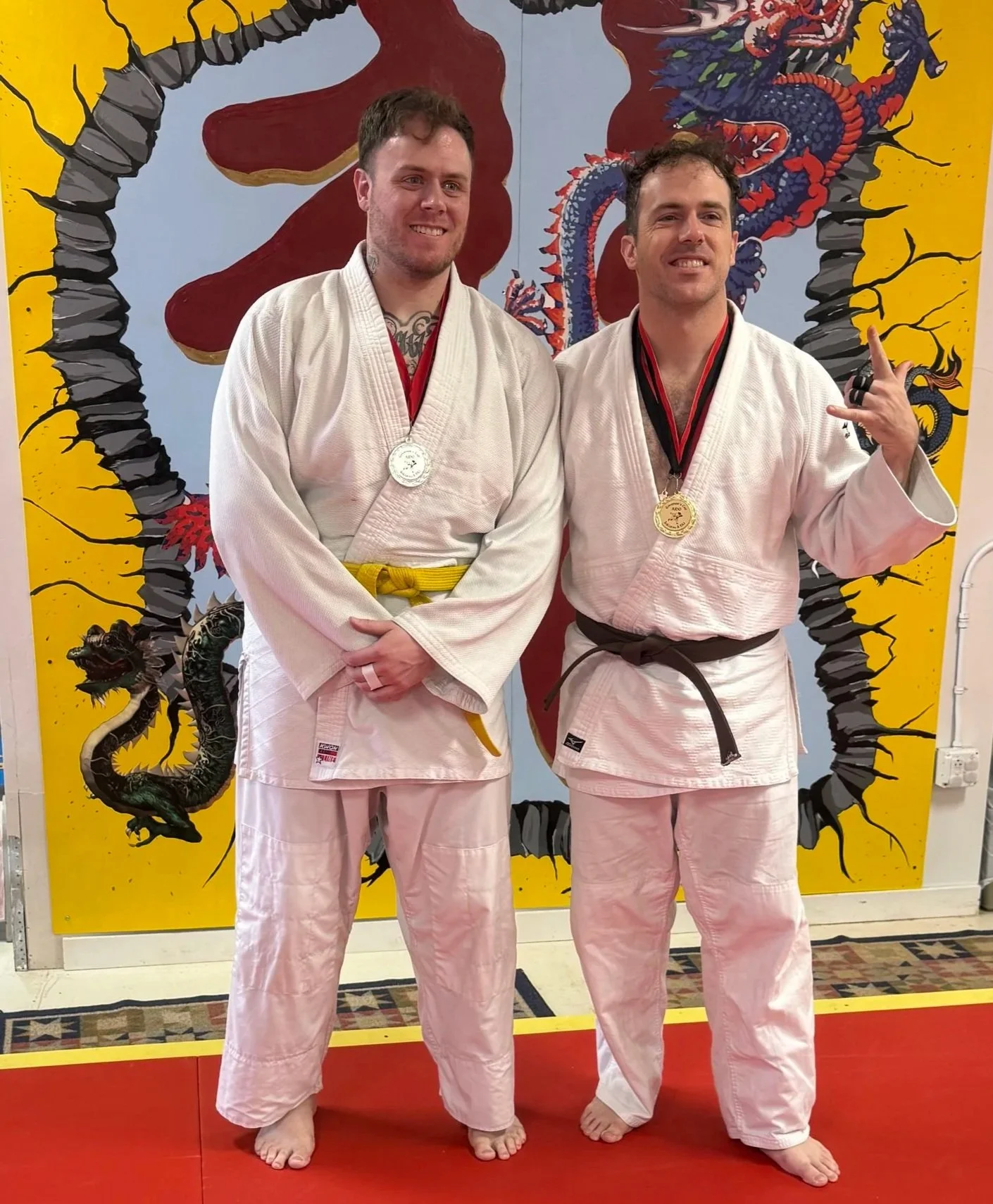
Left to right - Joseph Swede and Erik Whiting awarded medals
Joseph Swede starting the morning with the first match of the day, a master’s men’s heavy match against Erik Whiting, an brown belt an experience competitor. Despite the difference in experience, Swede manage to counter an early attempt at uchi-mata by Whiting with tani-otoshi, earning Swede a yuko with a move he’d only learned approximately a week earlier. Once on the ground, the award of yuko caused some confusion for the competitors, who slowed briefly before succumbing to the crowd’s urging to continue, with Swede gaining the top position in the resulting scramble. Whiting obtained a half guard, which Swede passed with some difficulty, but not before Whiting was able to turn face down, a position he maintained until the pair was stood up. When action recommenced, the pair gripped up with Whiting applying the “sticky foot” method of de-ashi-barai, leading to a brief hopping exchange and Swede attempted to free his foot. While Joe was able to finally get his foot free, Erik capitalized on the moment, charging in for o-soto-gari, winning the match by ippon. Despite this, Swede left the tournament with silver medals in both the men’s master’s heavy and the men’s novice heavy.
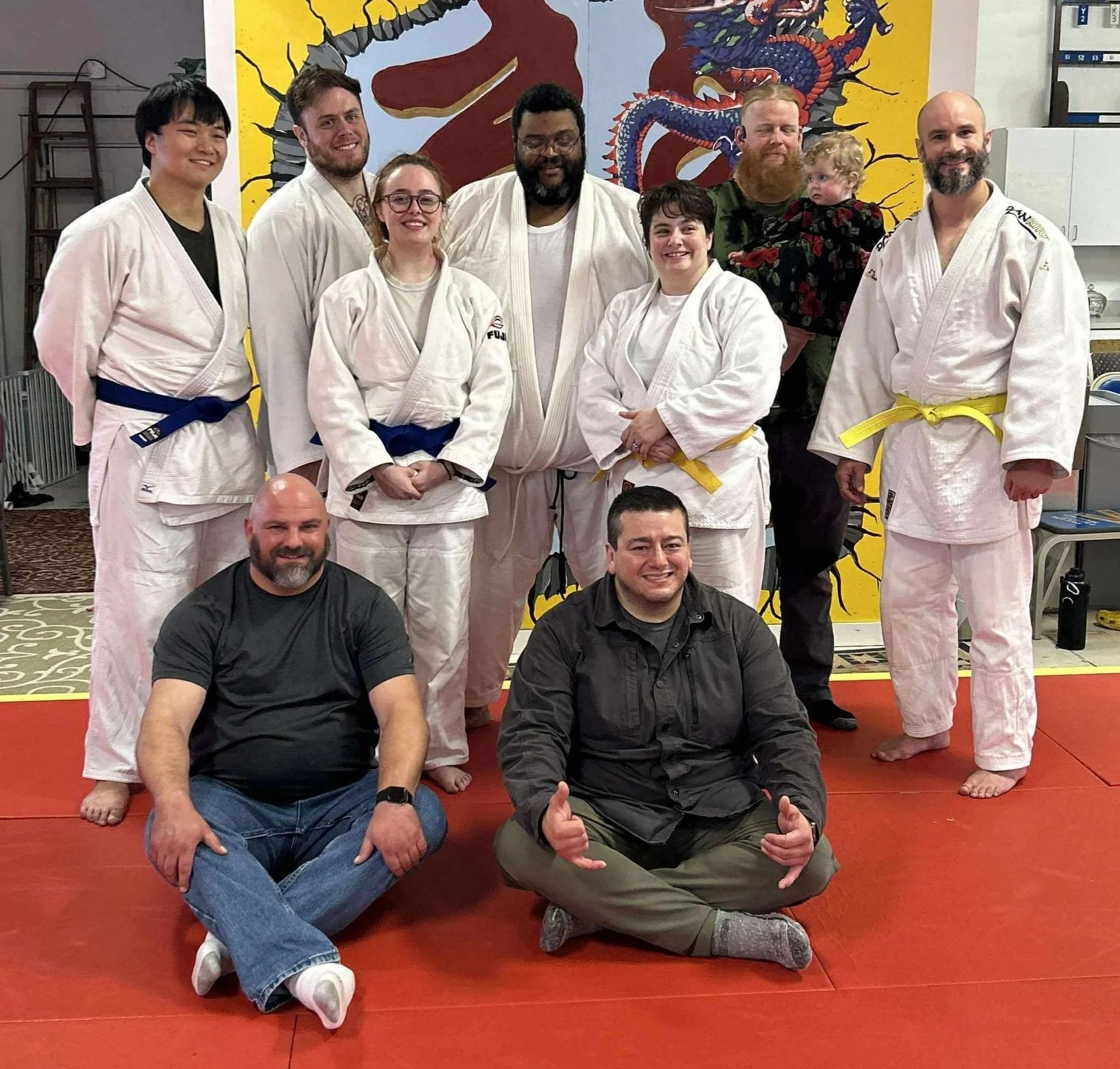
Dojo Puts Up Strong Performance at 2025 Iowa State Championship
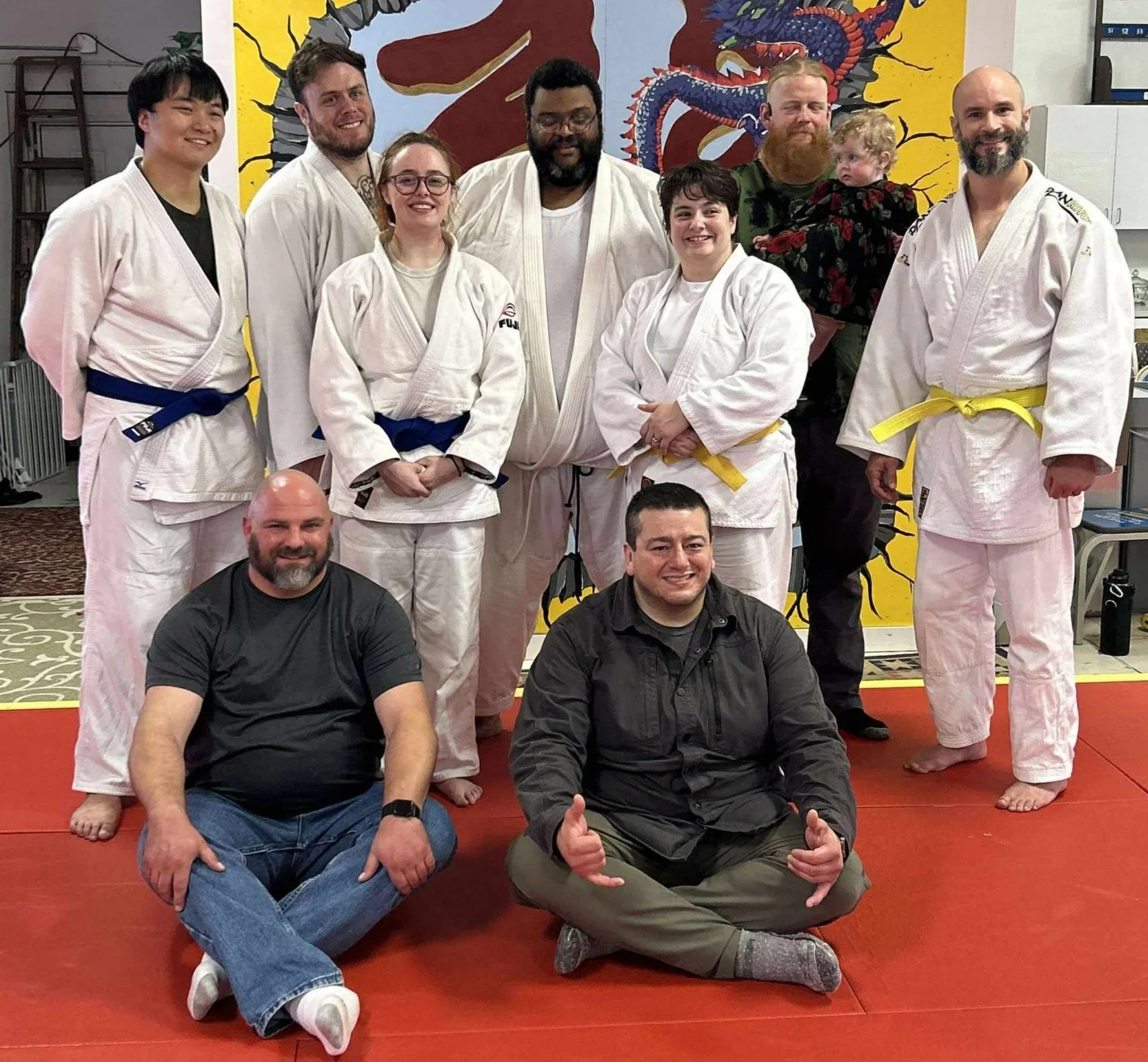
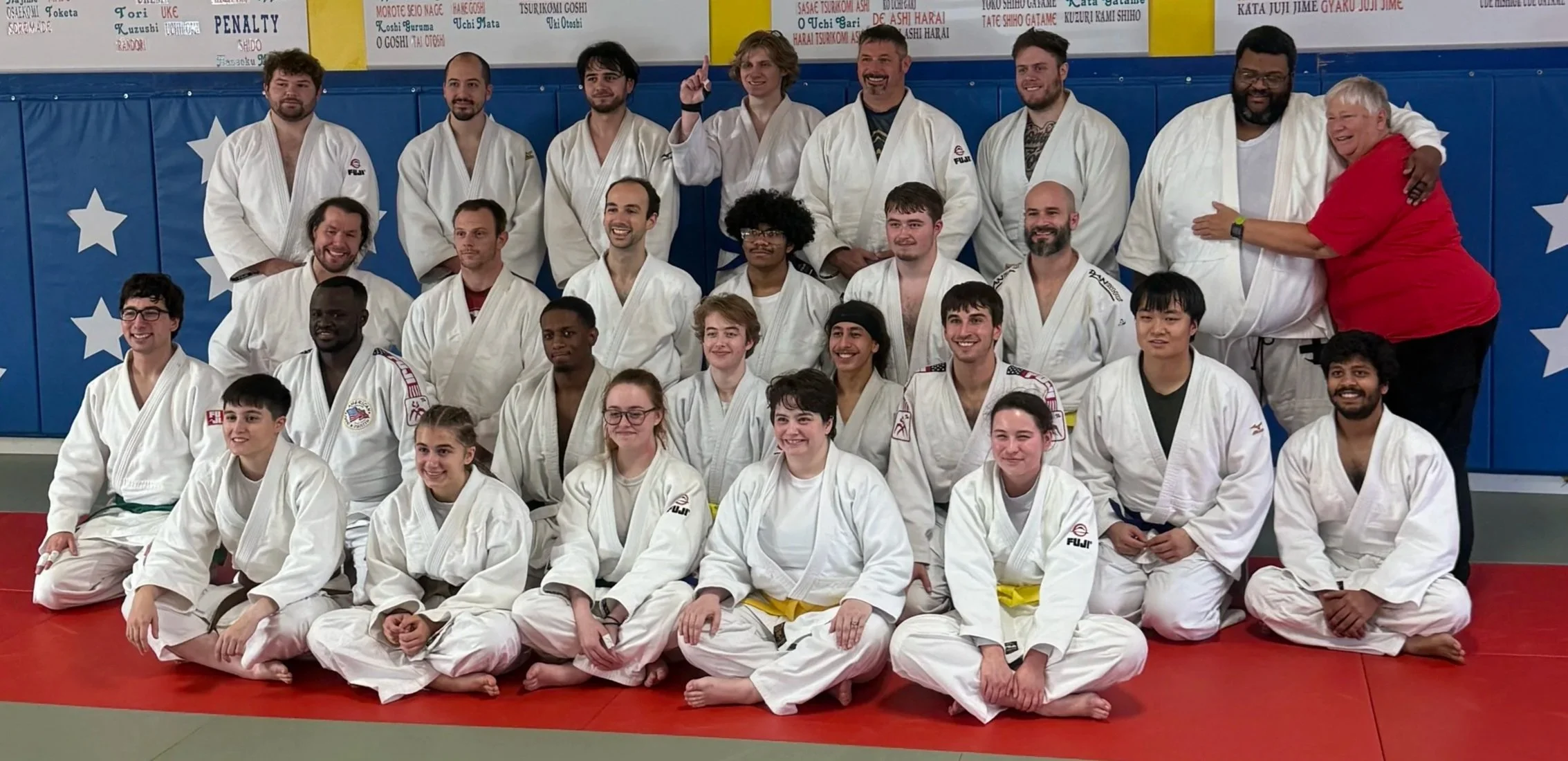
Left to Right, Top Row - Jae, Swede, Liv, Jacob, Rachel, Logan, Ember, Boli. Bottom Row - Sensei Chaye Thompson, Sensei Leo Rodriguez
The 2025 Iowa State Championship was held on Sunday, November 9th, rather than on its usual Saturday, due to the seminar led by Megumi Sensei being held at the tournament venue on Saturday. Despite the unusual timing, the tournament had a strong turnout of 77 competitors, of which 8 were adults from the Des Moines Judo Academy. The day saw our dojo represented by veteran competitors like Jaehyeok Choi (yonkyu/green belt), Olivia McBee (sankyu/brown belt) and Jacob van Cleaf (yonkyu/green belt). It was also the first outing for the newly promoted Joseph Swedenhjelm (rokyu/yellow belt) and a mainstay of our sister school, Squared BJJ of Grinnell, whose been granted rank through the Des Moines Judo Academy under Sensei Leo Rodriguez, Bolívar Aponte Rolón (rokyu/yellow belt). Rachel Salisbury (rokyu/ yellow belt) also made it on the mat for her second shiai or “competition,” determined to put the lesson’s from her experience in Minnesota, as well as her recent training, to good use. The team was supported by several members of our dojo, and coached by Sensei’s Leo Rodriguez and Chaye Thompson.
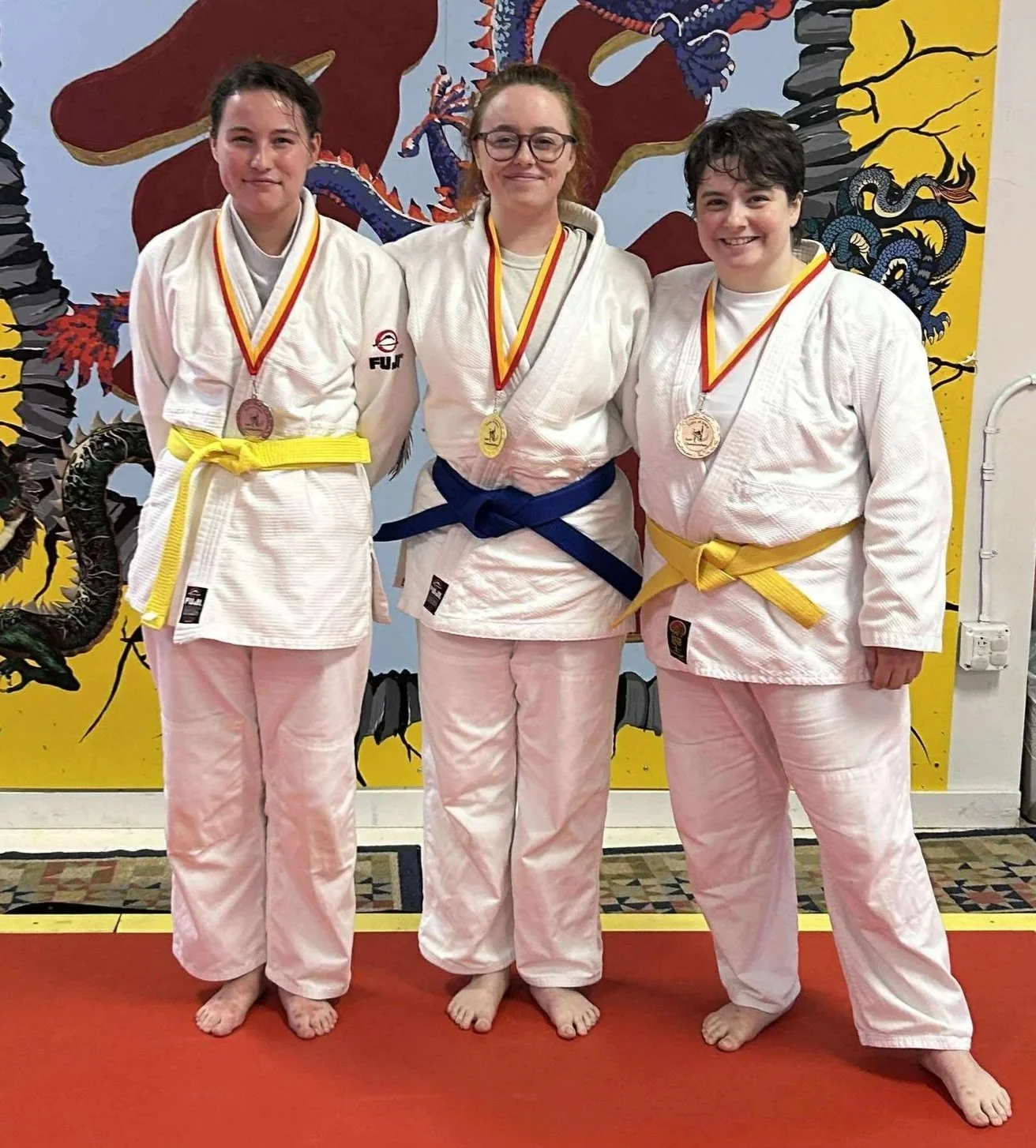
Left to Right - Alayna Gushin, Liv, Rachel
Olivia (“Liv”), and Rachel faced off against each other and Alayna Gushin of Teikiatsu Judo in the Senior Women’s Medium Division. Rachel lost to Alayna, but won against Liv by scoring two waza-ari (a half-point score, awarded for pinning an opponent for at least 10, but fewer than 20, seconds, or a throw that fails to score an ippon) using sasae tsurikomi ashi to obtain waza-ari awasete ippon (lit. “two half-points make a full point”), securing a bronze medal and marking her first tournament win. The match between the two was exciting, taking multiple bouts with several falls failing to score points and prolonged periods of groundwork. Despite being defeated by Rachel, Liv rallied and went on to beat Alayna by scoring ippon (a full point score which instantly ends a match, awarded for pinning an opponent for 20 seconds, or throwing an opponent so they land on their back with force, speed, and control) with drop seoi-nage (shoulder throw), a move she’s been cultivating for at least the past two months. Although the throw initially appeared to not be working, Liv roused her inner bushi (warrior) and continued to drive forward until her opponent was first disbalanced, then fallen, securing her the gold and the fastest ippon in the women division, and second fastest ippon by a woman all day, at 15 seconds.
Left to Right - Garret Cox, Swede, Jacob
Joseph Swedenhjelm (“Swede”) fought in division two of the Senior Men’s Novice Heavy, which was split into two divisions due to an unprecedented 7 qualifying men showing for competition. Division two consisted of Swede, Jacob van Cleaf, and Garret Cox of Quad City Judo & Fitness. Swede took the gold, defeating both his rival competitors with a ko-uchi-gari to o-soto-gari combo he learned in Thursday evening classes from Sensei Leo, taking out Garret Cox in 15 seconds, and Jacob in 14 seconds. Jacob van Cleaf managed to hold out against Garret Cox for 1 minute and 8 seconds, before learning a valuable lesson about fighting until you hear sore-made or “finished” (the call the indicates the match is concluded and all fighting has ceased) and being pinned, gaining him the bronze medal.
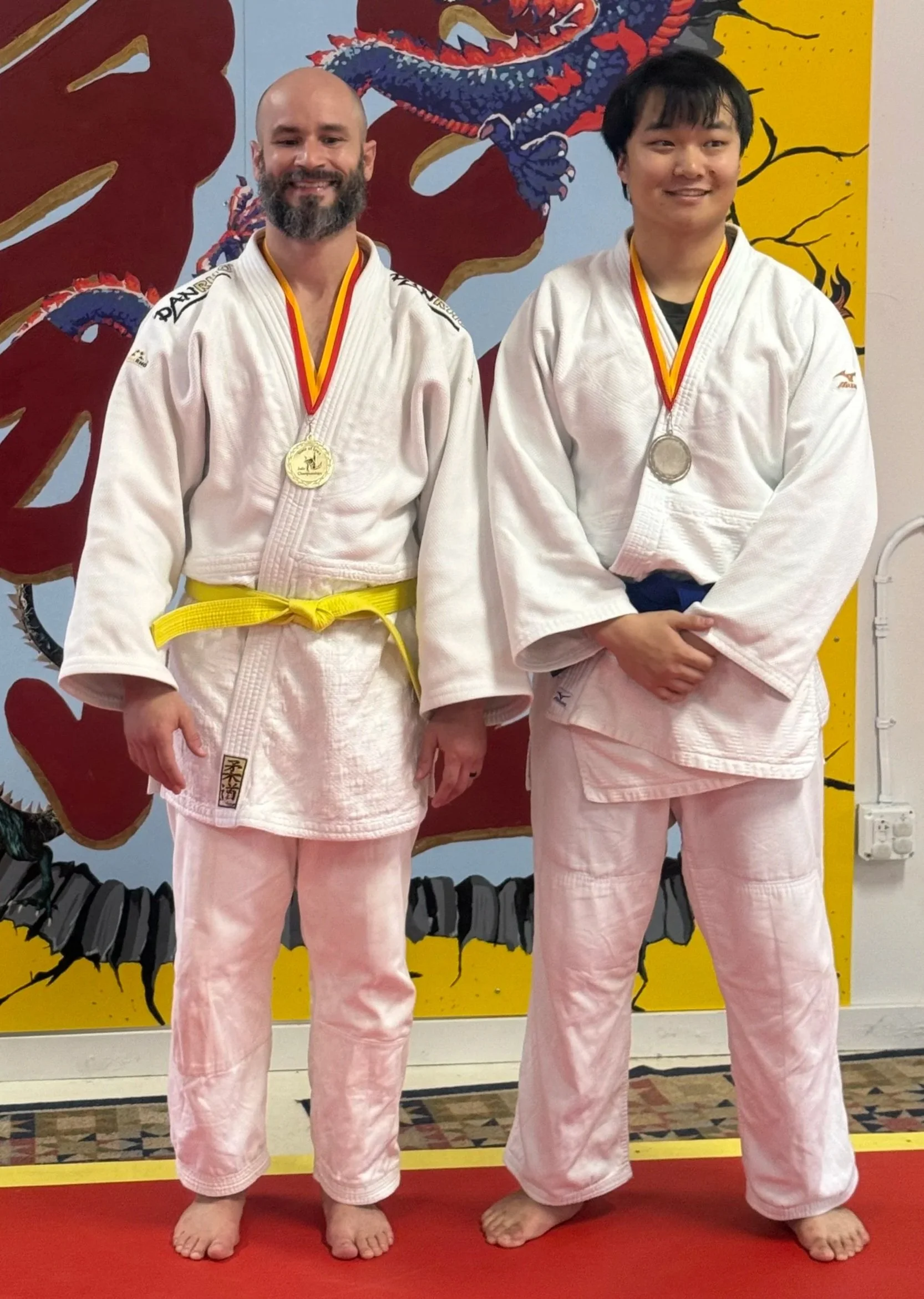
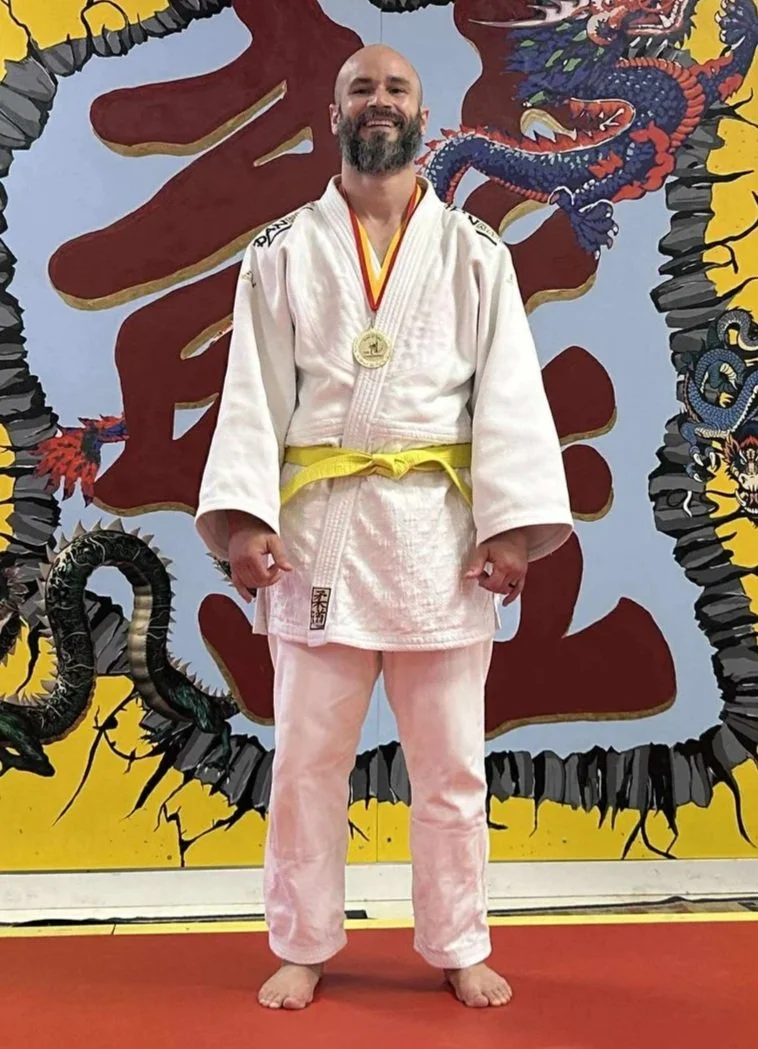
Bolivar (“Boli”) had a gold banner day, sweeping both division one of the Senior Men’s Novice Heavy and the Men’s Masters 30-45 Heavy, each by ippon with a magnificent harai-goshi in approximately 16 to 40 seconds, with only two matches standing out. The Men’s Masters was best two out of three against Cory Cooper of Sempai Judo Academy, with the Boli’s second win being by walkover due to Cory being injured in an earlier match. The other standout was against our own Jaehyeok Choi (“Jae”), a long time successful competitor who also managed to dominate everyone else in his division. The match between the two took 2 minutes and 17 seconds, falling just 43 seconds short of going the full 3 minute period, but was ultimately Boli’s victory to claim, leaving Jae with an amazing story and a well earned silver medal.
A bracket redistribution saw Jacob van Cleaf moved to the Master’s Men Over 45 Heavy, to fight Michael Keller Jr. of Wahadachi Judo Club to attempt to retain the master’s champion title, which he had been training with an eye towards since last year’s championship. Jacob was able to win the first match by pin using mune-gatame in one minute and forty seconds, securing his first victory via osae-komi (hold down/pin). According to Sensei Leo Rodriguez, Jacob “fought great and showed lots of growth and resilience,” with the second and third matches being close and taking fifty-three seconds and one minute and forty-seven seconds respectively. Unfortunately Jacob was unable to secure a second victory and gave up the title. However, when asked by his son if it intended to focus with the same intensity to win it back next year, Jacob replied “can’t stop, won’t stop, don’t even know how to stop.”

The Judo Throw That Works in Tournaments, Street Fights, and Family Reunions (Sasae Tsurikomi Ashi)
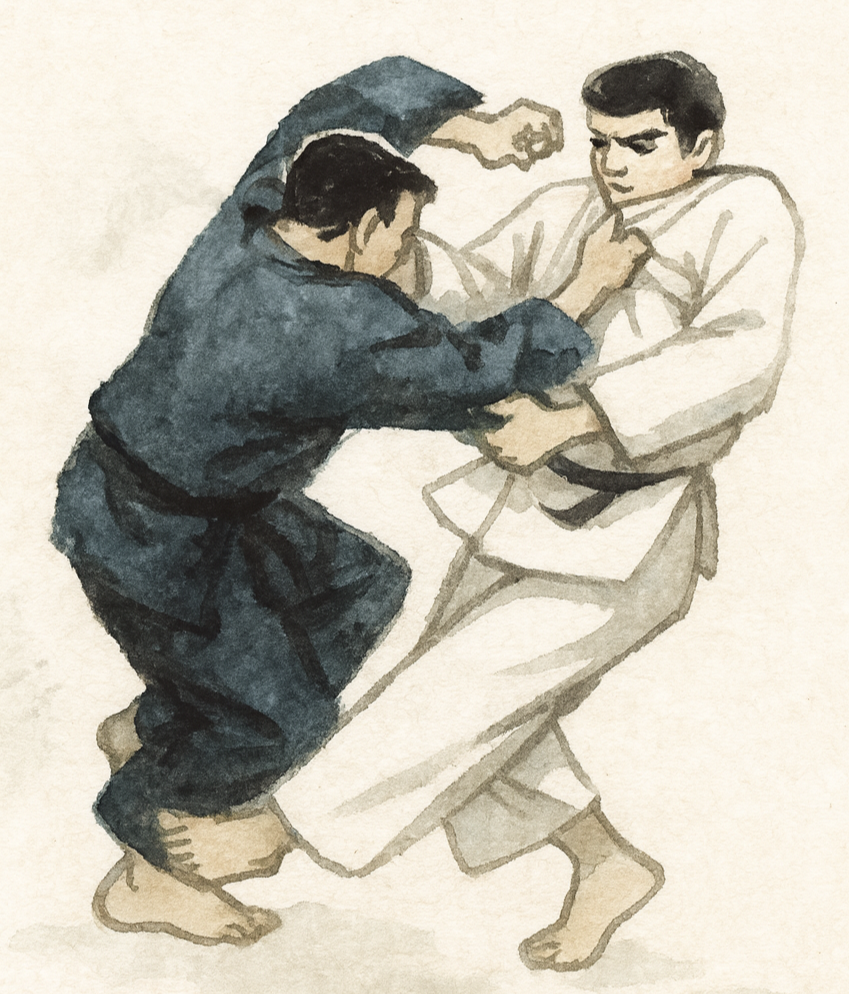
Every Judo throw has its own flavor. Some are loud and dramatic, like a suplex on pay per view. Others are sneaky, like stealing the last slice of pizza without anyone noticing. Sasae Tsurikomi Ashi (a fancy way of saying “foot block throw”) is the perfect middle ground. Smooth, sharp, and efficient. One moment your opponent feels solid, the next they are flat on the mat wondering if you hacked gravity.
Let’s break it down with the holy trinity of Judo: Kuzushi, Tsukuri, and Kake.
What Is Sasae Tsurikomi Ashi?
The name sounds intimidating. Sasae Tsurikomi Ashi (sah-sah-eh tsoo-ree-koh-mee ah-shee) literally means “supporting foot lifting pull.” Translation: you are blocking their leg while pulling them forward, and suddenly their balance has trust issues.
It is all about three phases:
Kuzushi (off balance) where you make them stumble.
Tsukuri (entry or setup) where you slide into position like you are setting up the perfect prank.
Kake (execution or finish) where you commit to the throw and send them earthbound.
Get these three in sync and you will look like you barely touched them. Miss one and you look like you just tried to trip your grandma at Thanksgiving. Timing is everything.
Breaking Down the Move: Grips, Kuzushi, Tsukuri, Kake
Grips: Start with a collar grip and a sleeve grip. Collar grip is the steering wheel. Sleeve grip is the gas pedal. Together you decide where this ride is going.
Kuzushi: This is step one. Pull on the collar, rotate their body, and force their weight onto their near leg. You are basically turning their stance into a Jenga tower missing the bottom block.
Tsukuri: Now that they are wobbly, you step in. Block their near leg with yours, slide into the right angle, and set up the trap. Think of it like pulling out a chair just as someone goes to sit down. You want to be perfectly timed and perfectly placed.
Kake: Finally, the finish. Commit. Drive through with the block, keep pulling with your grips, and let physics do its thing. This is the payoff. The mat-slam. The dunk. The mic-drop.
The Magic of Timing: Watch the Counters
Sasae Tsurikomi Ashi is not a cheat code. Your opponent can still fight back. But if you know the counters, you can turn their defense into your offense.
Ouchi Gari (Major Inner Reap): If they step back to dodge your block, great. They just offered you their far leg. Sweep it and boom, they are down.
Kouchi Gari (Small Inner Reap): If they shift away too hard, they might expose their near leg. That is like leaving your phone unlocked with toddlers nearby. Reap it, finish the throw, and claim victory.
Using Sasae Tsurikomi Ashi as a Counter
Here is where the technique gets spicy. You can flip it around as a counter to their throws.
Counter to Tai Otoshi (Body Drop): As they drag you forward to drop you, block their leg mid pull and Reverse Uno card them onto the mat.
Counter to Uchi Mata (Inner Thigh Throw): When they try to hoist your leg, jam their near leg and turn their attack into your highlight reel.
It is martial arts Uno. Reverse their reversal.
Two Sneaky Setups
Pull Push Kuzushi: Yank their collar forward, push their sleeve back. It is like trying to steer a shopping cart with a broken wheel. When they stumble, step in with tsukuri, then finish with kake. Smooth, sneaky, satisfying.
Fake Seoi Nage (Shoulder Throw): Pretend you are going for a shoulder throw. They will shift their weight to defend. Perfect. That is your tsukuri moment. Slide in, block their leg, and boom, kake seals the deal.
This one is a crowd pleaser. Like juking left in basketball and driving right to the hoop.
Self Defense Bonus Round
Judo is not just for tournaments. It is practical. If someone charges you in real life, you do not need to slam them WWE style. With Sasae Tsurikomi Ashi, you time their rush, block their leg, and let their momentum do the dirty work. They are on the ground, you are still standing, and you get to leave the scene looking like you practiced self-defense and choreography at the same time.
The Takeaway: Why You Need This Throw
Sasae Tsurikomi Ashi is all about finesse. With kuzushi, tsukuri, and kake, you have balance breaking, setup, and finish in one clean sequence. It works as an attack, a counter, or a self-defense move. And it is efficient. Less effort from you, more face to mat time for them.
Like all great Judo techniques, there is no “best throw,” just the right throw at the right time. And once you master this foot block, you will start seeing opportunities everywhere.
So grab your gi, hit the mats, and try Sasae Tsurikomi Ashi. And when you finally land it clean, drop a comment here and tell me the story. Did your partner give you that “seriously?” face? That is the universal sign of success.
A Stealthy Reflection
At Des Moines Judo Academy, we follow the curriculum, but we also bend it. Sometimes we go out of order because we want everyone to see what Judo has to offer, not just the pieces tied neatly to belts and levels. Yes, some techniques are complicated and demand hours of training and solid ukemi to keep it safe. But it is inspiring, and it fills the cup. For me, Sasae Tsurikomi Ashi spilled over from other arts. In Silat there is Puter Kepala (Head Turn). A failed Sasae often becomes the perfect setup for a successful Puter Kepala. I was able to learn the throw faster because I had other fundamentals baked in. That is the beauty of this technique. It is considered a beginner’s throw, but when mastered it opens doors. It builds fundamentals that carry into everything, inside and outside Judo. Even in Kali stick fighting, the same lifting and pulling principles appear. Add footwork and positioning, and suddenly you are creating across arts because the fundamentals are tattooed into your DNA.

Rokkyu Duo Clean Up at 2025 Governor’s Cup
From Left to Right - Kasten Lappe, Jon Milledge, Ian Schaff
On March 15th, 2025, two yellow belts or “rokkyu” from the Des Moines Judo Academy made their competitive debut at the Iowa Governor’s Cup Tournament, which was hosted by Teikiatsu Judo in Ames, Iowa. Adult competitor turnout was a sharp decline from 2024, during which sensei and academy founder Bret Parkhill made his final regular appearance coaching. Despite adult participation being thinned by scheduling and recent injuries, Karsten Lappe and Jon Milledge made up for quantity with quality.
Karsten, is a young man of 22 years of age who attends most, if not all, weekday classes at our dojo and occasional Saturday open mats. Standing 6’7”, Karsten fought in the 220lbs+ senior men’s open rank, winning both his matches against the green belt, or “yonkyu,” Brent Shipley from Sempai Judo. Karsten’s first match was won by application of the “renraku waza'“ (combination technique; when two or more attacks are made in sequence) Uchi-Mata, followed by O-Soto-Gari, earning an “Ippon” (full point, which wins a match). His second match was won by scorring Ippon via “Osae Komi” (pin), a varient of Yoko-Shiho-Gatame (commonly referred to as side control in jujitsu), after taking his opponent to the ground without scoring, securing the gold medal for his division. A southpaw, Karsten is known in our club for his explosive strength, preference for extremely high collar grips, and his love of Uchi-Mata, which he’s striven to improve since he first arrived at the Des Moines Judo Academy.
Jon Milledge, a man of 35 who stands at approximately 5’8”, fought in both the senior men’s middle weight novice, and the senior men’s 161lbs & Under open rank divisions. Jon, an mma fighter in the process of winding down his mma career, is one of a pair of far travelling Judoka who consistently grace our dojo at Saturday open mats and the occasional Thursday class. Jon fought five total matches between the two divisions. While Jon lost his first match by throw for Ippon, he went on to only have one more loss for the day, by submission while attempting to pass guard. Jon’s extensive drilling of “ashi waza” (leg/foot techniques), particularly foot sweeps, showed, as he scored “Waza Ari” (half point, two of which are required to win a match) by both Sasae Tsurikomi Ashi, and De Ashi Barai. While he did win one additional match by submission, the highlight of the adult competition of this tournament was an Ippon scored using Nidan Ko-Soto-Gari as a counter to Uchi-Mata, further demonstrating Jon’s ashi waza dominance. Sensei Parkhill, reviewing a video of the match, commented that the counter was “a thing of beauty!” Jon took gold in the open rank, and silver in the novice.
Despite being the only adult judoka to take to the mat or “tatami” to represent our Academy at this tournament, they were not alone. Ian, Jon’s long time training partner and travelling companion, was also present to give his support despite being wounded. Jon’s family was also present to cheer him on, and were enthusiastic, if frequently confused. The three are seen together in the cover photo for this entry, celebrating their victory.