SISTER SCHOOL PROMOTION: PURPLE BELT AND PRODIGEE OBTAIN ORANGE BELTS
We at the Des Moines Judo Academy have been blessed with amazing instructors since our founding by Bret Parkhill in the early 90s. Each instructor’s history and experience brings a unique perspective to our art, offering perspective and insight students might otherwise not benefit from. Sensei Leo Rodriguez, our Thursday evening instructor is not only a renown judoka, but is also a black belt in the art of Brazilian Jiujitsu (BJJ for short) under Gabriel Gonzaga, and heads Grinnell College’s chapter of the Squared BJJ Club. Both schools benefit from a sister school relationship, with members of one being permitted to attend events for the other at no costs, a benefit several members of our dojo have taken advantage of regularly for over a year. Sensei Leo encourages this cross training with a pragmatic “iron sharpens iron” rationale. The benefit of this cross training relationship is that some students from each school have begun to attain ranks in the other art, their interest piqued by their experiences against their opponents on the mat.
Most recently, on March 22nd, 2026, two students of Grinnell Squared BJJ have tested and advanced to the rank of gokyu in Judo; Will Schulte and Bolivar Aponte Rolon.
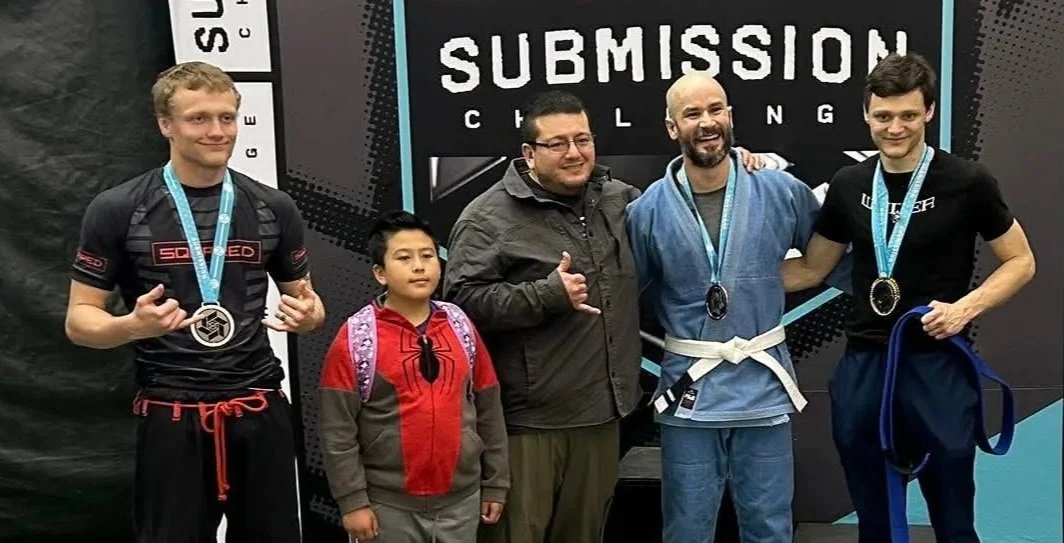
From Left to Right - WIll Schulte, Spiderman, Sensei Leo, Bolivar, Hot Blue
Note - No one took promotion pictures, so I made do. Lesson - Take promotion pictures.
Will Schulte is a former wrestler and long time student of Sensei Leo in the art of BJJ, as week as a decorated and seasoned competitor in that art, having previously relied primarily on his wrestling experience for takedowns, with some study of nage-waza (throwing techniques) to enhance his wrestling. However, soon after cross-training became a regular thing between the Des Moines Judo Academy and our sister school, Will began to see the benefits of developing his Judo. On March 9th, 2026, Will was awarded his purple belt in BJJ, marking his progress as being halfway to his black belt. In BJJ belts are awarded when an instructor believes you’re adequately accomplished, with no formal testing, and no language or history requirement. While Will finds the Japanese terminology and technique nomenclature challenging he is none the less a marvelous judoka, overcoming those portions of examination to make it to the technique demonstrations, where he shines. Will, like many former wrestlers, has an affinity for O-Goshi, and O-Soto-Gari. However, his recent experiences with those who primarily study judo, along with the influence of Sensei Leo, have seen him greatly improve his foot sweeps, namely Ko-Uchi-Gari and De-Ashi-Barai. Off the mat, Will applies his training in his work as a corrections officer, and spends time with his wife and daughters.
Bolivar Aponte Rolon (“Boli” for short) should be familiar to reader of this blog, having made his competitive debut at the 2025 Iowa State Championship, and sweeping each division with repeated used of his masterful Harai-Goshi, and remarkable athleticism. Boli also is a fan of Ippon Seoi-Nage, and lately has been broadening his mastery of koshi-waza (hip techniques) with Koshi-Guruma. While confident on the ground, Boli, unlike many BJJ practitioners, seems to almost prefer to begin engaging opponents standing. Off the mat, Boli spends most of his limited free time with this wife and daughter.
Congratulations to both of newly promoted members of our sister school, and may our continued association be fruitful.
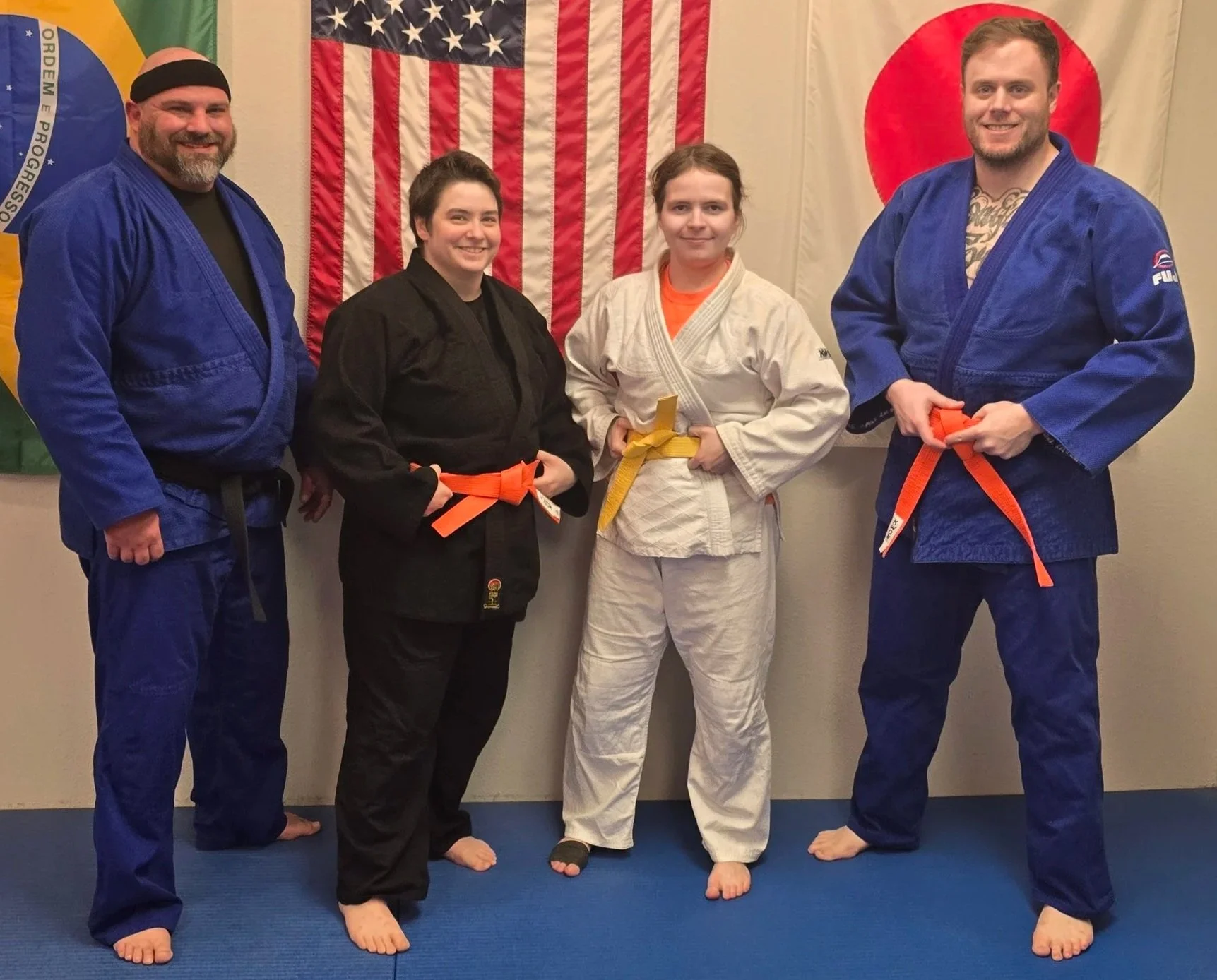
Second Fundamental’s Class Promotion Sees Three Students Rank Up
Des Moines Judo Academy’s fundamentals classes, originally developed as an experiment to make taking up Judo later in life easier for adult students, has continued to have great ongoing success. While individual class sizes fluctuate, most evenings see four to eight students practicing, with the heart of the group being a consistent core of students whose primary engagement is through the program. This program, helmed by Sensei Chaye Thompson, has experienced numerous successes, including increased student retention, and strong tournament performance among its attendees. It’s most recent success was had on March 9th, 2026, when a group of its students underwent the programs’ second round of promotions.
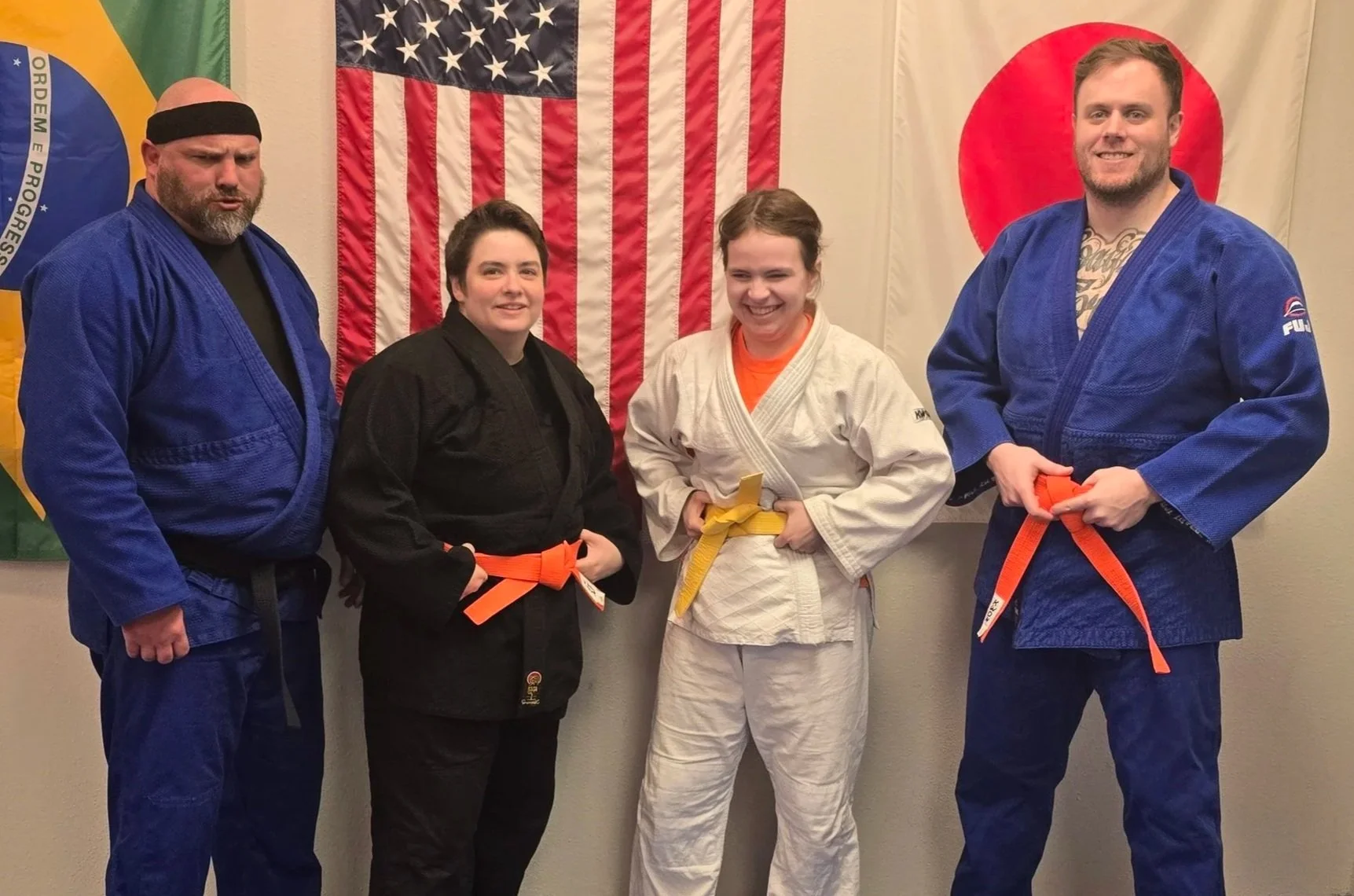
From Left to Right - Sensei Chaye Thompson, Rachel Salisbury, Audrey Wirth, Joseph Swedenhjelm
The promotion group consisted of Joseph Swedenhjelm, Rachel Salisbury, and Audrey Wirth.
Joseph Swedenhjelm (“Joe Swede” or “Swede” for short), is a married father, former wrestler, and regular competitor. He recently took silver in two divisions at the Governor’s Cup and gold at the 2025 Iowa State Championship. He almost exclusively attends fundamentals classes, with occasional visits to Thursday night classes with Sensei Leo. While his Ko-Uchi-Gari to O-Soto-Gari combination brought him a lot of success at the 2025 State Championship, and he continues to work on a tournament legal version of Kata-Guruma or “Fireman’s Carry,” due to its familiarity from his wrestling background, he has recently had success with O-Goshi and been developing his Sumi-Gaeshi. He’s also grown more expressive with his fellow judoka in class, though is still subtle and quiet. Swede was promoted to gokyu, receiving his orange belt.
Rachel Salisbury, a pharmacy technician whose passion for judo was ignited when she observed the 2023 Iowa State Championship, has been a frequent competitor with a ravenous training scheduled. In addition to fundamentals classes, Rachel also attends 5:30 PM judo classes on Monday and Wednesday, Thursday class, Friday and Saturday open mats, and open mat at our sister-school Grinnell BJJ on Sundays. This training schedule has fueled an explosive amount of growth, as well as consistent silver medals at the 2026 Governor’s Cup and 2025 State Championship. Rachel continues to develop her drop Morotre-Seoi-Nage, which, along side her O-Soto-Gari, has brought her much success at tournament recently. Similarly, she continues to cultivate her ude garami from guard, but has expanded her ground game to include a solid Kesa-Gatame and Koshi-Jime on opponents in turtle position. Rachel was promoted to gokyu, receiving her orange belt.
Audrey Wirth is the newest edition to the promoting class. A manga enthusiast whose passion grew into an interest in martial arts, Audrey first started judo several months ago. Originally having started in 5:30 PM judo classes on Monday and Wednesday, and Thursday class, Audrey found the fundamentals classes better suited to her needs and transitioned to primarily attending those. She is also a regular attendee of Saturday open mats. Audrey currently only knows a very limited number of “nage-waza” (throwing techniques), the majority being footsweeps, namely De-Ashi-Barai and Ko-Uchi-Gari, due to her small stature. Despite being small, she has also developed an explosive Hasami-Gaeshi (Scissor Sweep), allowing her to easily take Tate-Shiho-Gatame (mount) against opponents in her guard. Audrey was promoted to rokkyu, receiving her yellow belt.
Dojo Puts Up Strong Performance at 2025 Iowa State Championship
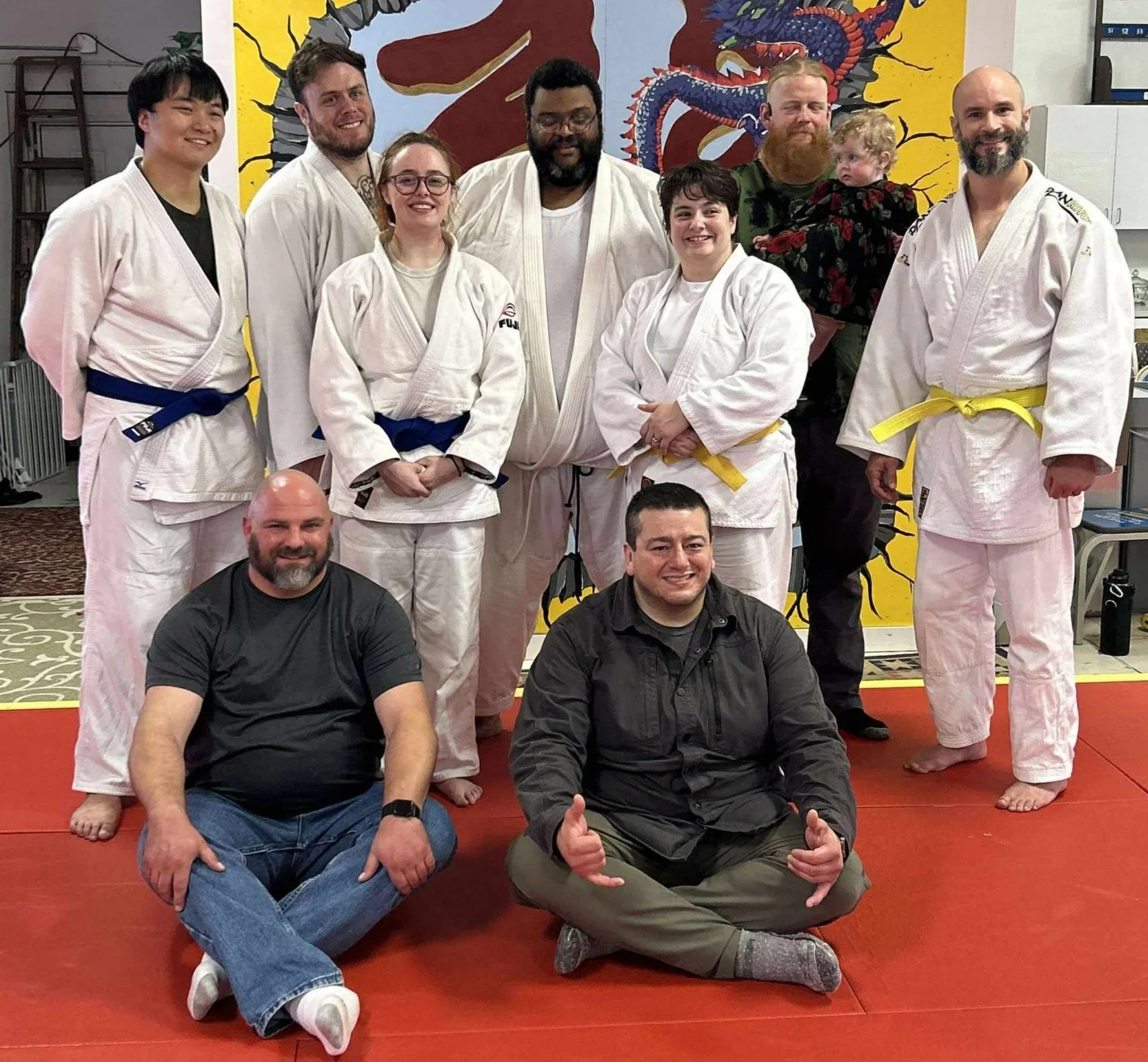
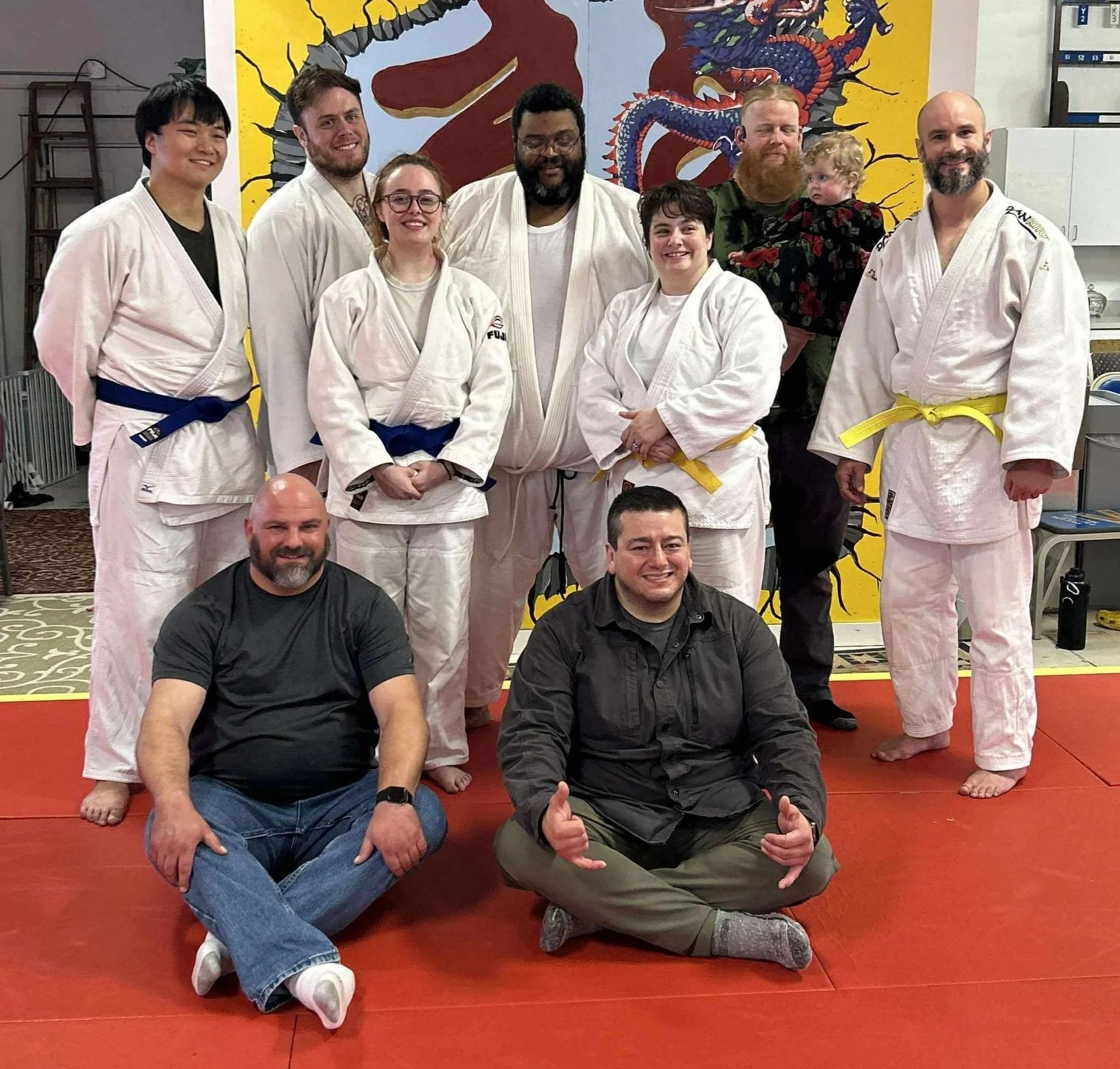
Left to Right, Top Row - Jae, Swede, Liv, Jacob, Rachel, Logan, Ember, Boli. Bottom Row - Sensei Chaye Thompson, Sensei Leo Rodriguez
The 2025 Iowa State Championship was held on Sunday, November 9th, rather than on its usual Saturday, due to the seminar led by Megumi Sensei being held at the tournament venue on Saturday. Despite the unusual timing, the tournament had a strong turnout of 77 competitors, of which 8 were adults from the Des Moines Judo Academy. The day saw our dojo represented by veteran competitors like Jaehyeok Choi (yonkyu/green belt), Olivia McBee (sankyu/brown belt) and Jacob van Cleaf (yonkyu/green belt). It was also the first outing for the newly promoted Joseph Swedenhjelm (rokyu/yellow belt) and a mainstay of our sister school, Squared BJJ of Grinnell, whose been granted rank through the Des Moines Judo Academy under Sensei Leo Rodriguez, Bolívar Aponte Rolón (rokyu/yellow belt). Rachel Salisbury (rokyu/ yellow belt) also made it on the mat for her second shiai or “competition,” determined to put the lesson’s from her experience in Minnesota, as well as her recent training, to good use. The team was supported by several members of our dojo, and coached by Sensei’s Leo Rodriguez and Chaye Thompson.
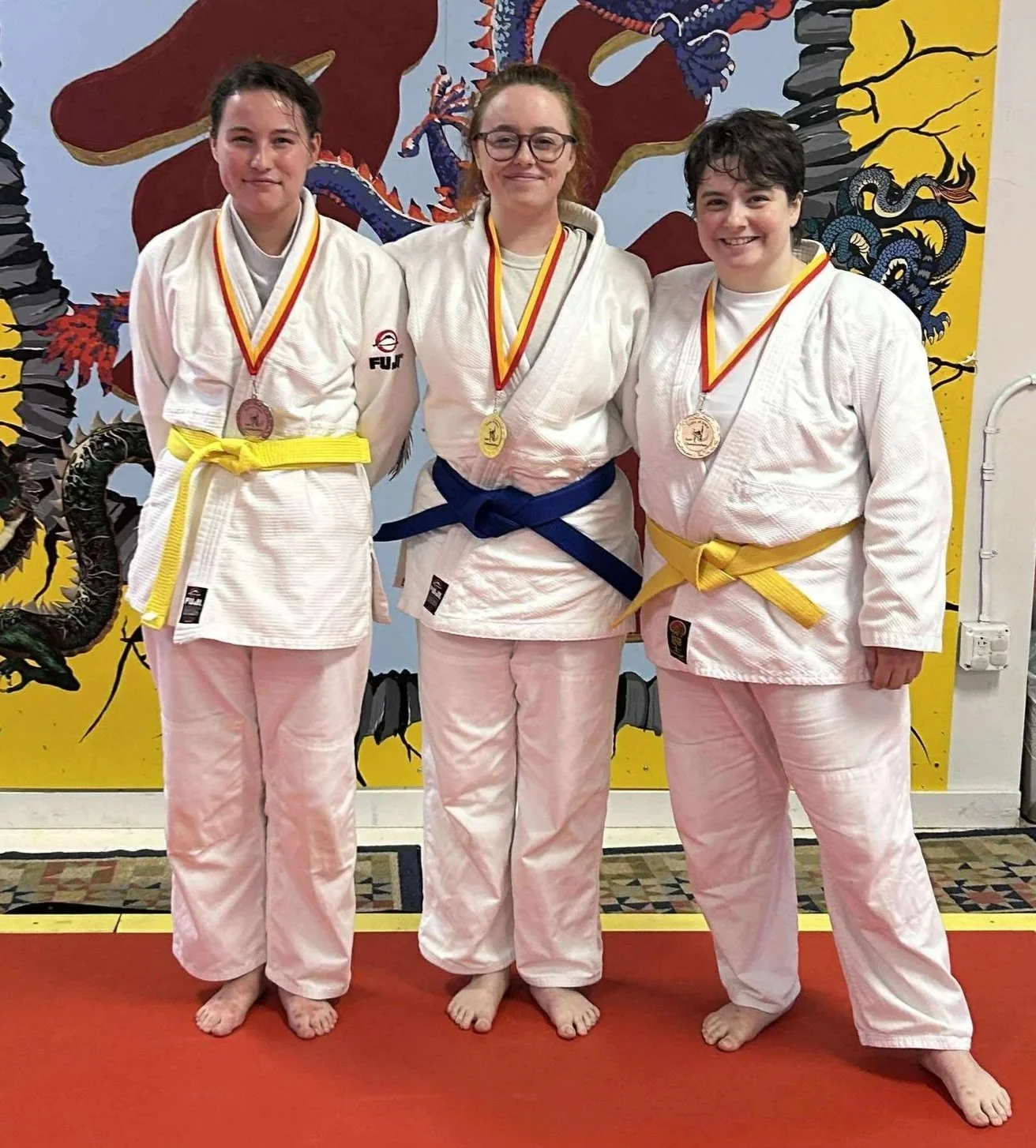
Left to Right - Alayna Gushin, Liv, Rachel
Olivia (“Liv”), and Rachel faced off against each other and Alayna Gushin of Teikiatsu Judo in the Senior Women’s Medium Division. Rachel lost to Alayna, but won against Liv by scoring two waza-ari (a half-point score, awarded for pinning an opponent for at least 10, but fewer than 20, seconds, or a throw that fails to score an ippon) using sasae tsurikomi ashi to obtain waza-ari awasete ippon (lit. “two half-points make a full point”), securing a bronze medal and marking her first tournament win. The match between the two was exciting, taking multiple bouts with several falls failing to score points and prolonged periods of groundwork. Despite being defeated by Rachel, Liv rallied and went on to beat Alayna by scoring ippon (a full point score which instantly ends a match, awarded for pinning an opponent for 20 seconds, or throwing an opponent so they land on their back with force, speed, and control) with drop seoi-nage (shoulder throw), a move she’s been cultivating for at least the past two months. Although the throw initially appeared to not be working, Liv roused her inner bushi (warrior) and continued to drive forward until her opponent was first disbalanced, then fallen, securing her the gold and the fastest ippon in the women division, and second fastest ippon by a woman all day, at 15 seconds.
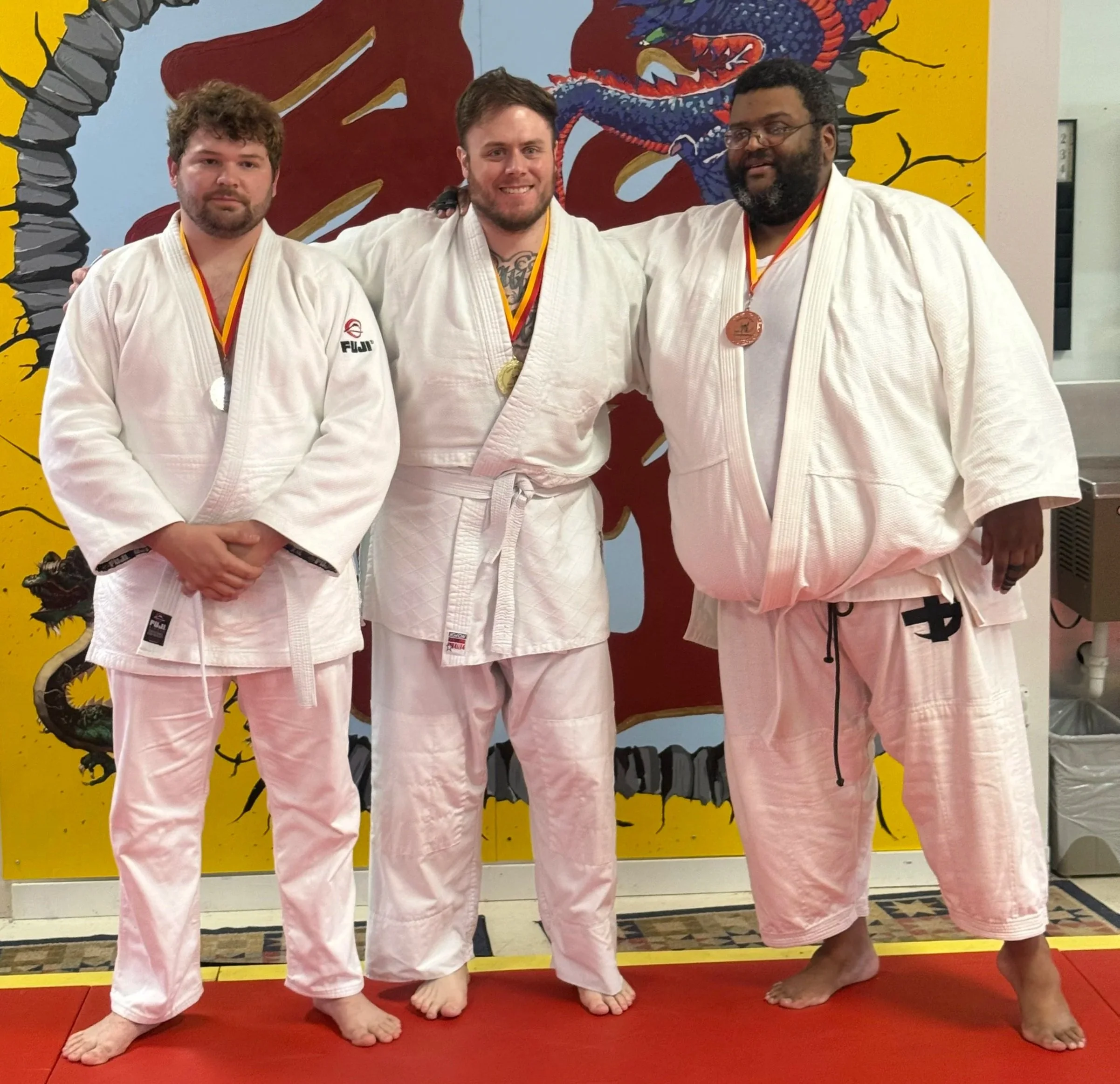
Left to Right - Garret Cox, Swede, Jacob
Joseph Swedenhjelm (“Swede”) fought in division two of the Senior Men’s Novice Heavy, which was split into two divisions due to an unprecedented 7 qualifying men showing for competition. Division two consisted of Swede, Jacob van Cleaf, and Garret Cox of Quad City Judo & Fitness. Swede took the gold, defeating both his rival competitors with a ko-uchi-gari to o-soto-gari combo he learned in Thursday evening classes from Sensei Leo, taking out Garret Cox in 15 seconds, and Jacob in 14 seconds. Jacob van Cleaf managed to hold out against Garret Cox for 1 minute and 8 seconds, before learning a valuable lesson about fighting until you hear sore-made or “finished” (the call the indicates the match is concluded and all fighting has ceased) and being pinned, gaining him the bronze medal.
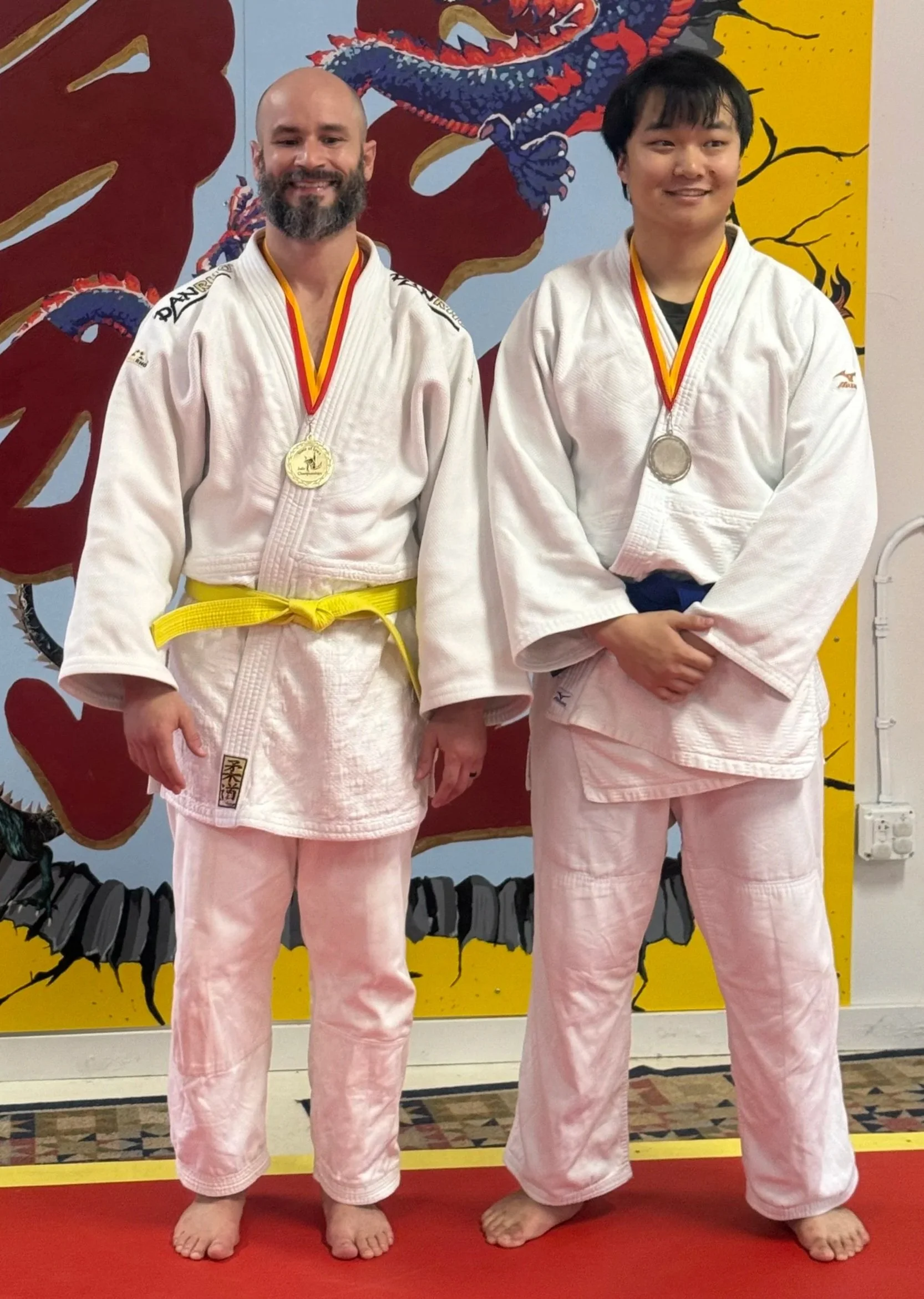
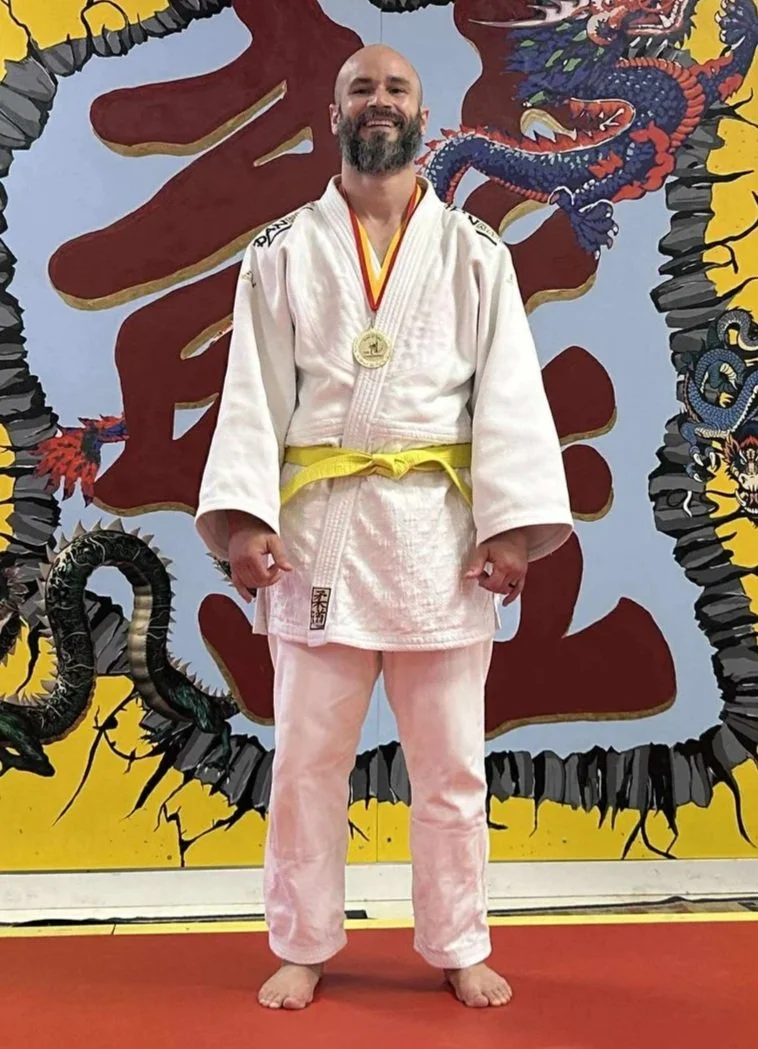
Bolivar (“Boli”) had a gold banner day, sweeping both division one of the Senior Men’s Novice Heavy and the Men’s Masters 30-45 Heavy, each by ippon with a magnificent harai-goshi in approximately 16 to 40 seconds, with only two matches standing out. The Men’s Masters was best two out of three against Cory Cooper of Sempai Judo Academy, with the Boli’s second win being by walkover due to Cory being injured in an earlier match. The other standout was against our own Jaehyeok Choi (“Jae”), a long time successful competitor who also managed to dominate everyone else in his division. The match between the two took 2 minutes and 17 seconds, falling just 43 seconds short of going the full 3 minute period, but was ultimately Boli’s victory to claim, leaving Jae with an amazing story and a well earned silver medal.
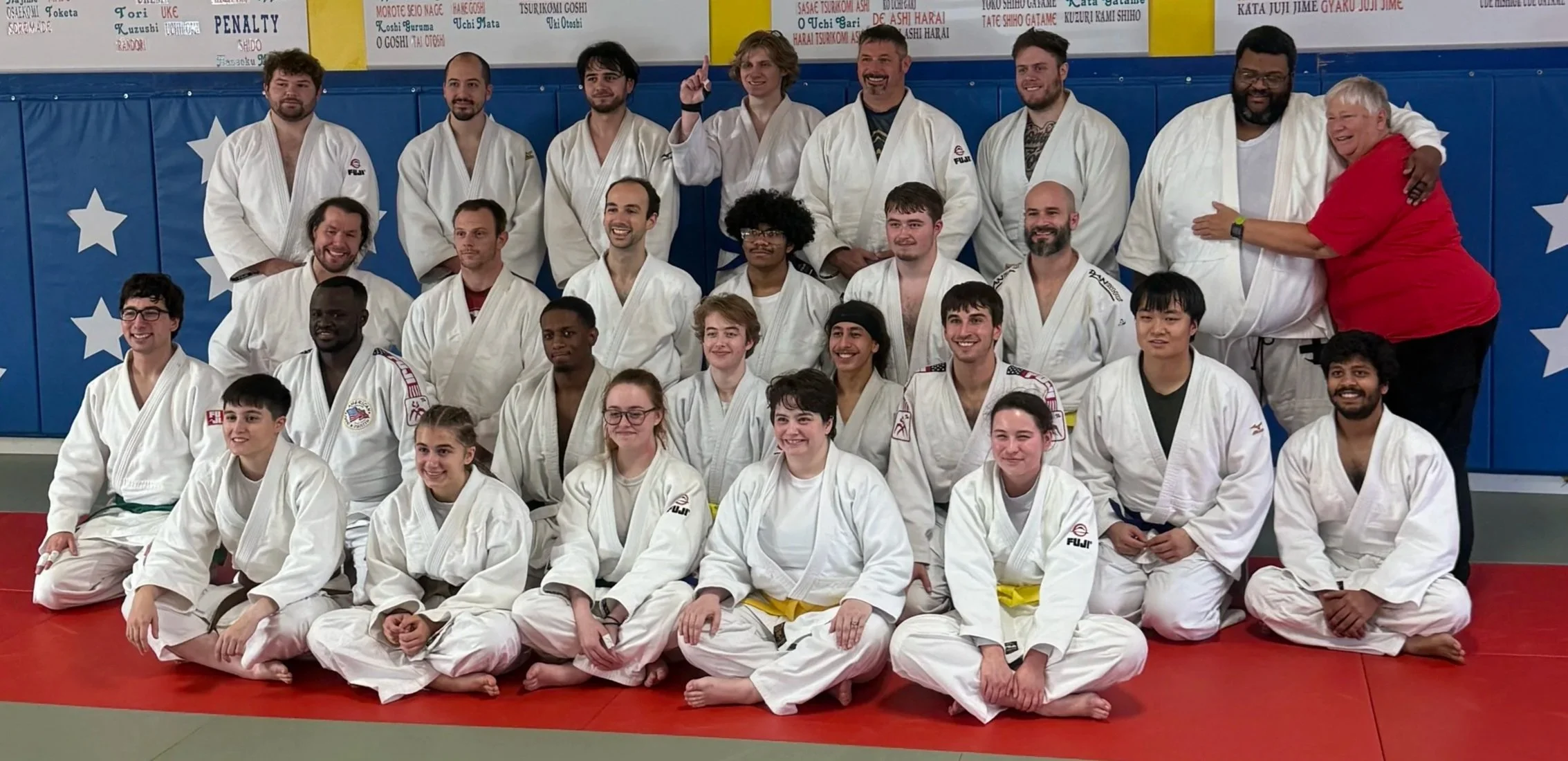
A bracket redistribution saw Jacob van Cleaf moved to the Master’s Men Over 45 Heavy, to fight Michael Keller Jr. of Wahadachi Judo Club to attempt to retain the master’s champion title, which he had been training with an eye towards since last year’s championship. Jacob was able to win the first match by pin using mune-gatame in one minute and forty seconds, securing his first victory via osae-komi (hold down/pin). According to Sensei Leo Rodriguez, Jacob “fought great and showed lots of growth and resilience,” with the second and third matches being close and taking fifty-three seconds and one minute and forty-seven seconds respectively. Unfortunately Jacob was unable to secure a second victory and gave up the title. However, when asked by his son if it intended to focus with the same intensity to win it back next year, Jacob replied “can’t stop, won’t stop, don’t even know how to stop.”
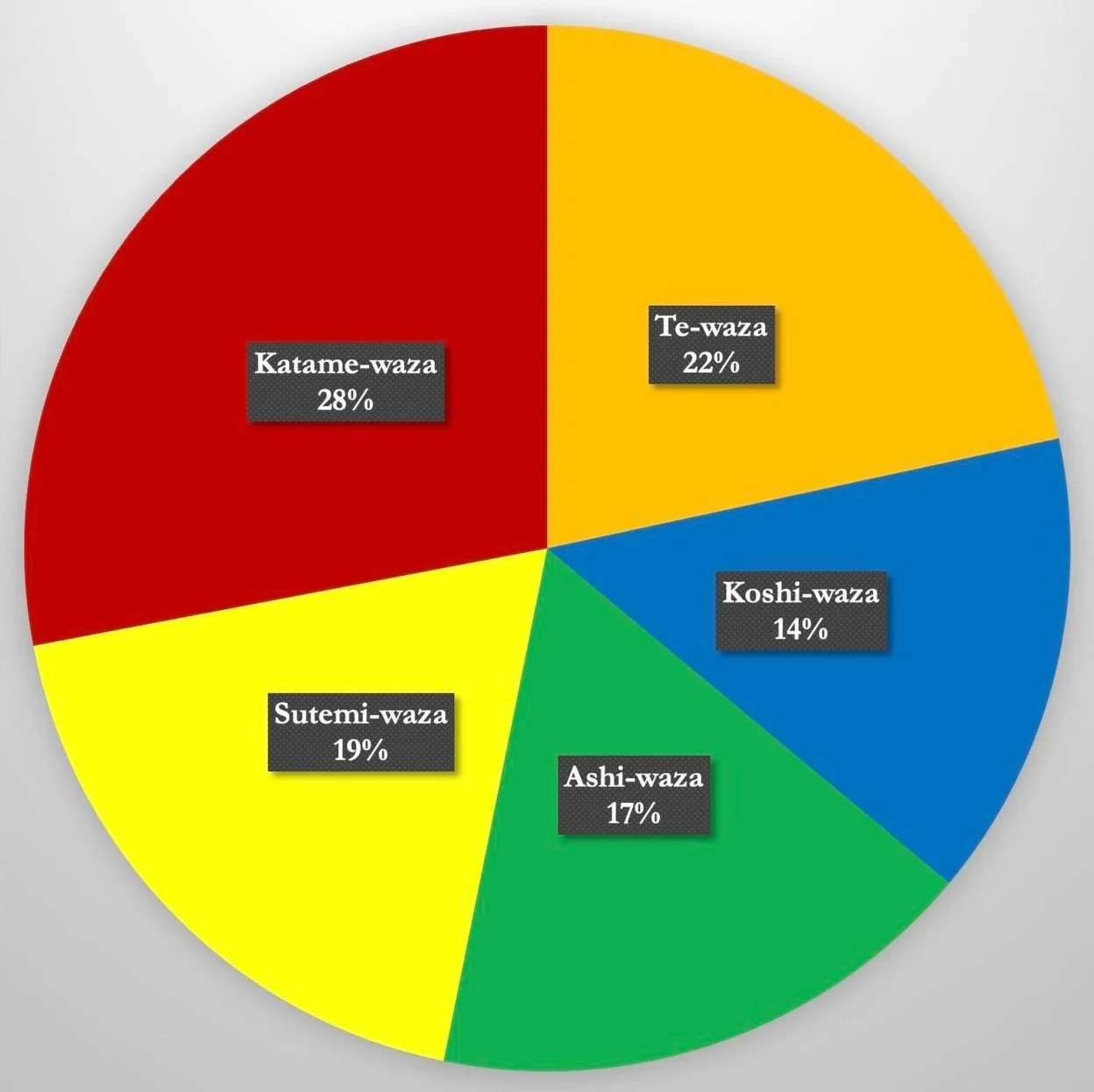
Mastering the High-Percentage Throws for Ippon: Stats from the Best Judoka
Judo is all about timing, technique, and precision. While there are dozens of throws to learn, certain throws consistently lead to Ippon (the perfect throw), which ends the match. But which throws have the highest success rates, and what sets the world’s best Judoka apart in their ability to execute these throws? Let’s dive into the stats behind high-percentage throws and take a look at some of the top Judo players and the techniques that help them dominate on the mat.
What Makes a Throw High-Percentage for Ippon?
In Judo, Ippon is the ultimate goal of any throw. It’s awarded when a competitor successfully throws their opponent onto their back with force, speed, and control. However, not all throws are created equal. Some throws have a higher success rate due to their ability to off-balance the opponent quickly and forcefully.
High-percentage throws for Ippon tend to share a few common features:
Strong kuzushi (off-balancing): Creating a strong imbalance is the first step in setting up any successful throw.
Proper timing: Knowing when to execute the throw is critical. The best Judoka can sense the exact moment to attack.
Adaptability: Being able to switch between different throws depending on the opponent’s movement and reactions.
Top Judo Players and Their High-Percentage Ippon Throws
The world’s best Judoka have refined certain throws that they’ve used to earn consistent victories. Let’s take a look at some of the top players in Judo and their high-percentage throws for Ippon.
1. Teddy Riner (France) – Uchi Mata (Inner Thigh Throw)
Teddy Riner, one of the most decorated Judo players in history, has won numerous World Championship titles and Olympic gold medals. His signature move is the Uchi Mata (inner thigh throw).
Throw Breakdown: Riner uses his massive size and incredible control to execute a flawless Uchi Mata, where he sweeps his opponent’s leg while simultaneously lifting them with his body. Riner’s ability to maintain perfect kuzushi while using his strength and leverage makes this throw one of his highest-percentage techniques.
Success Rate: Uchi Mata is one of the highest-scoring throws in his repertoire, delivering Ippon with great consistency due to his ability to get his opponent’s leg off the ground and control their movement.
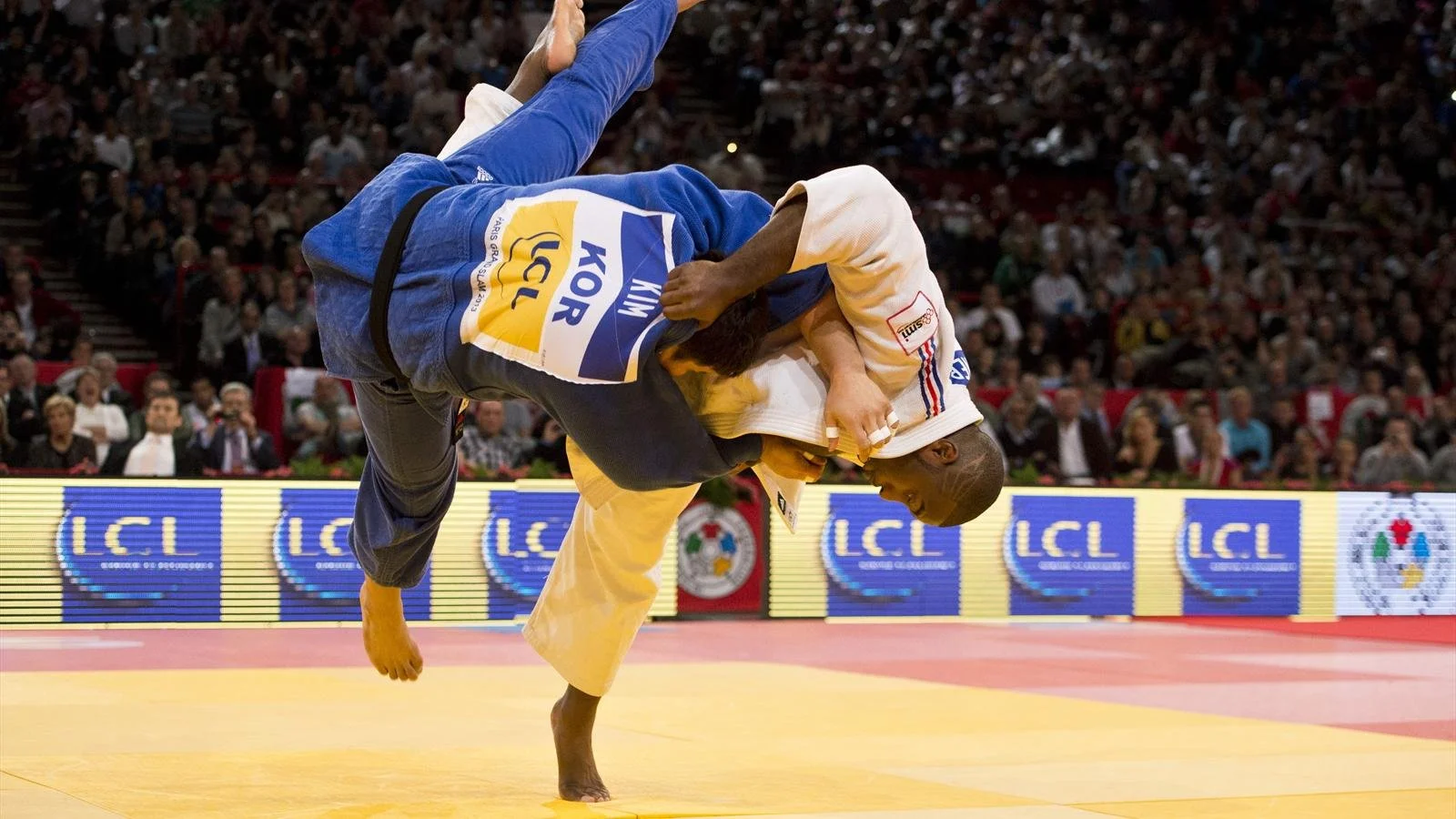
Teddy Riner performs a perfect Uchi-Mata
2. Shohei Ono (Japan) – Seoi Nage (Back Carry Throw)
Shohei Ono is known for his Seoi Nage, one of the most successful throws in Judo. His technique has helped him win multiple World Championships and Olympic gold.
Throw Breakdown: Seoi Nage is a shoulder throw where the Judoka uses their hip and shoulder to lift the opponent onto their back, creating a clean Ippon. Ono’s success lies in his flawless timing, quick entry into the throw, and precision in lifting and throwing his opponent.
Success Rate: Ono has a high success rate with Seoi Nage, particularly when he enters the throw while his opponent is off-balance or attacking. His ability to land Ippon with this throw makes it his go-to technique in major competitions.

Shohei Ono performing O-Soto-Gari (for some reason) using an armpit grip.
3. Clarisse Agbegnenou (France) – Uchi Mata (Inner Thigh Throw)
Clarisse Agbegnenou is a dominant force in the women’s Judo world and has earned multiple World Championship titles. Like Riner, she excels with Uchi Mata, using it to secure many of her wins.
Throw Breakdown: Agbegnenou’s Uchi Mata is characterized by precise movement and exceptional timing. She utilizes her footwork and kuzushi to set up the leg sweep with devastating effectiveness. By lifting her opponent’s leg and guiding them over her, she secures Ippon with smooth control.
Success Rate: Uchi Mata is a key element of Agbegnenou’s strategy and results in frequent Ippon victories. She’s one of the most successful women in Judo with this move, frequently using it to dominate her opponents.
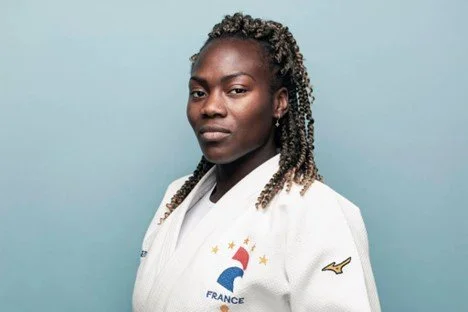
Clarisse Agbegnenou using expression based Kusushi
4. Ryu Shichinohe (Japan) – Tomoe Nage (Circle Throw)
Ryu Shichinohe, a competitor from Japan, is known for his creative and effective use of Tomoe Nage (circle throw), a throw that isn’t seen as often in modern Judo, but when executed correctly, it’s a powerful weapon.
Throw Breakdown: Tomoe Nage involves the Judoka using their body to create a circular motion, pulling their opponent over their head and onto their back. Shichinohe’s timing and positioning make him especially dangerous with this throw, as he can surprise opponents with quick and fluid movements.
Success Rate: Shichinohe’s ability to land Ippon with Tomoe Nage is impressive, especially given how unexpected the move is for opponents. This throw isn’t as commonly used at the highest levels but has been incredibly successful for him when executed at the right time.
5. Naohisa Takato (Japan) – Ashi Waza (Foot Techniques)
Naohisa Takato has made his mark in the Judo world with his Ashi Waza (foot techniques), particularly his Kouchi Gari (small inner reap) and De Ashi Barai (advancing foot sweep).
Throw Breakdown: Takato is known for his lightning-fast footwork. He uses Ashi Waza to attack his opponent’s legs, off-balancing them quickly and sweeping them off their feet with precision. His De Ashi Barai is a signature move that takes advantage of his opponent’s step forward to swiftly sweep their foot.
Success Rate: Takato’s foot sweeps result in high rates of Ippon. He is quick, agile, and precise, making him a dangerous competitor when it comes to Ashi Waza.

Naohisa Takato being goofy.
The High-Percentage Throws: Why Timing Matters
While the above Judoka have their favorite, high-success throws, the real secret to their success lies in timing. Ippon isn’t about just throwing an opponent, it’s about throwing them at the right moment. These high-percentage throws work because the Tori takes advantage of the opponent’s off-balance position and seizes the opportunity to execute the throw.
The success of a throw depends on:
Kuzushi (off-balancing): You need to get your opponent’s weight onto the leg or position that is vulnerable to your attack.
Timing: Knowing when your opponent is most vulnerable to a throw and reacting instantly.
Commitment: Once you’ve set up the throw, committing to it fully is key to executing it successfully.
The Takeaway: Mastering High-Percentage Throws
While there are many throws to master in Judo, certain throws consistently produce high rates of Ippon. Judoka like Teddy Riner, Shohei Ono, and Clarisse Agbegnenou have made their names with certain signature techniques that they’ve perfected through practice, timing, and precision.
For beginners and seasoned competitors alike, focusing on mastering these high-percentage throws can give you an edge in competition. Whether it’s Uchi Mata, Seoi Nage, or Ashi Waza, these techniques have been proven to work time and time again at the highest levels of Judo.
So, the next time you hit the mat, remember that mastering these high-percentage throws could be the key to landing that Ippon and taking your Judo to the next level.
Your Turn:
What are your high-percentage throws? Why do you use them, and how do they work best for you? Also, who is your Judo hero or inspiration? Let’s hear who motivates you and what throws you’ve mastered from their playbook. Share your thoughts in the comments below!